The Counselling Corner
Welcome to the Counselling Corner: A space where we will discuss all things mental health.
HOW TO LOVE YOUR CHILD – 5 Love Languages
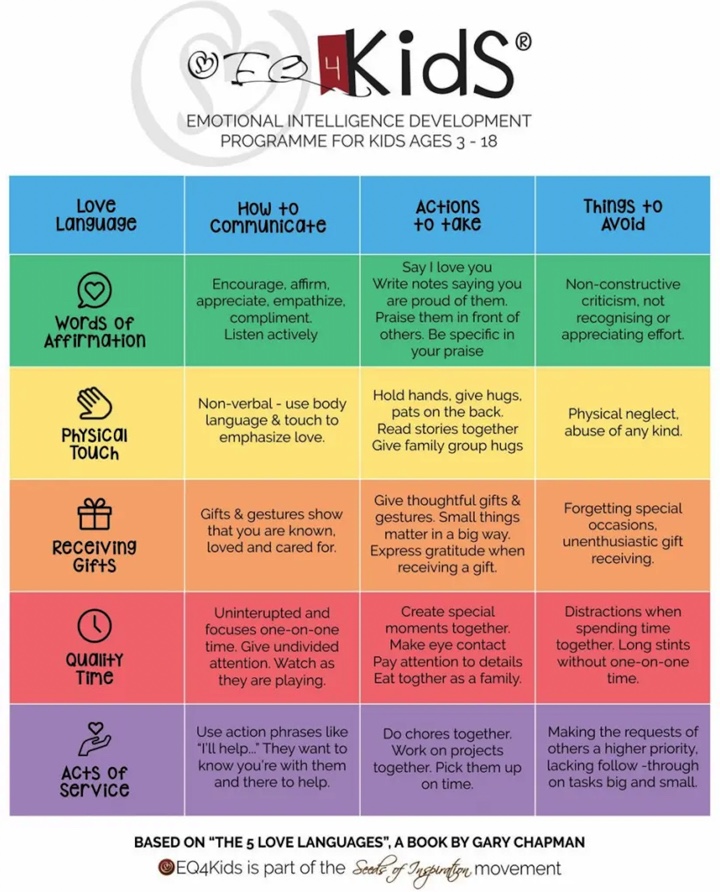
The Five Love Languages is a concept developed by Dr Gary Chapman. According to Chapman, there are five primary ways that people express and feel loved:
- Words of Affirmation: Verbal compliments and affirmations of love and appreciation.
- Quality Time: Giving undivided attention to the person you love.
- Receiving Gifts: Giving and receiving tangible gifts as symbols of love and affection.
- Acts of Service: Helping and serving the person you love in practical ways.
- Physical Touch: Holding hands, hugging, kissing, and other forms of physical affection.
Each person has a unique combination of love languages, and understanding your child’s love language can help you show them love in ways that are meaningful to them. Here are some tips for how to love your child according to their love languages:
- Words of Affirmation: If your child’s primary love language is words of affirmation, they will likely feel loved when you tell them how much you love them, give them verbal compliments and express your appreciation for the things they do. You can also write them notes or cards, or tell them how proud you are of their accomplishments.
- Quality Time: If your child’s primary love language is quality time, they will feel loved when you spend undivided time with them doing things they enjoy. This could mean playing a game with them, reading a book together, going for a walk or having a special “date” with just the two of you.
- Receiving Gifts: If your child’s primary love language is receiving gifts, they will feel loved when you give them small tokens of your affection. This could mean buying them a toy or a book, or making them a special craft. It is important to note that the gift doesn’t have to be expensive; it’s more about the thought behind it.
- Acts of Service: If your child’s primary love language is acts of service, they will feel loved when you help them and do things for them. This could mean cooking their favourite meal, doing their laundry or helping them with a project.
- Physical Touch: If your child’s primary love language is physical touch, they will feel loved when you give them hugs, hold their hand and give them kisses. This could also include other forms of physical affection such as massaging their shoulders or cuddling while reading a book.
It is important to remember that everyone has their own unique combination of love languages and, as children grow and develop, their needs and preferences may change over time. Also, it is a great idea to try to understand and practise all five languages, so you can ‘speak’ them all fluently and your child knows they are loved in many ways, not just one.
The best way to know for sure which language your child might feel most loved by is through observation, trial and error. Over time you will be able to find out what your child responds to best, as well as communicate to them that you love them through that language, and they will be more receptive to you, and will feel more loved. Follow the link to the Love Languages Quiz to find out your child’s most prominent love language: https://5lovelanguages.com/quizzes
The best way to know for sure which language your child might feel most loved by is through observation, trial and error. Over time you will be able to find out what your child responds to best, as well as communicate to them that you love them through that language, and they will be more receptive to you, and will feel more loved. Follow the link to the Love Languages Quiz to find out your child’s most prominent love language: https://5lovelanguages.com/quizzes
You are welcome to contact me with any enquiries, comments or discussion topics you would like to see in The Counselling Corner. inge.smit@iesmail.com
Until next time. Keep well!
-Inge Smit
-Inge Smit