Sculpture Casting Services
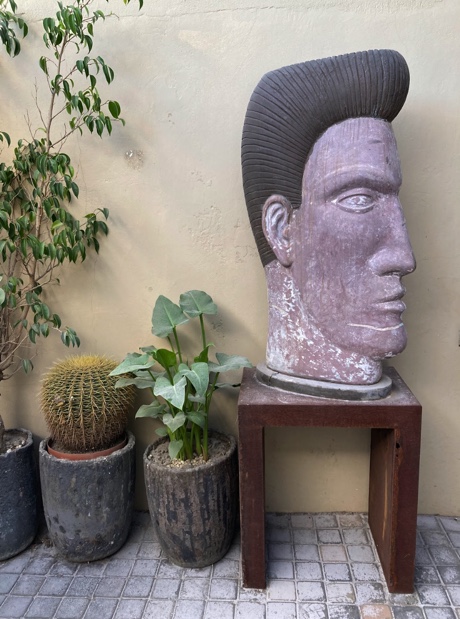
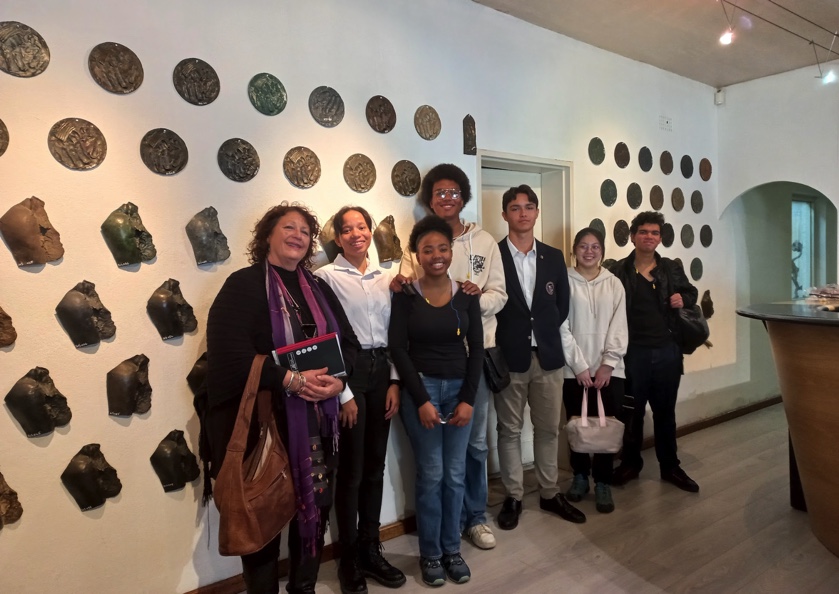
Some of our senior Art students have displayed a keen interest in sculpture, jewellery design and the casting process of late. This initiated another visit to Sculpture Casting Services in Strand on Monday this week. Sculpture Casting Services is the largest foundry in Africa, with branches in Somerset West, Strand, the prestigious Waterfront – Cape Town (foundry with gallery space) and Natal Midlands. The company is a highly specialised fine art foundry, casting from the smallest to largest sculptures (the monumental Mandela and recently a large 8m male lion) ever cast in Africa. Having grown from humble beginnings to one of the largest in Africa, it was founded by Robert Knight in the 90’s, later joined by his two younger brothers, Warren and Bruce Knight.
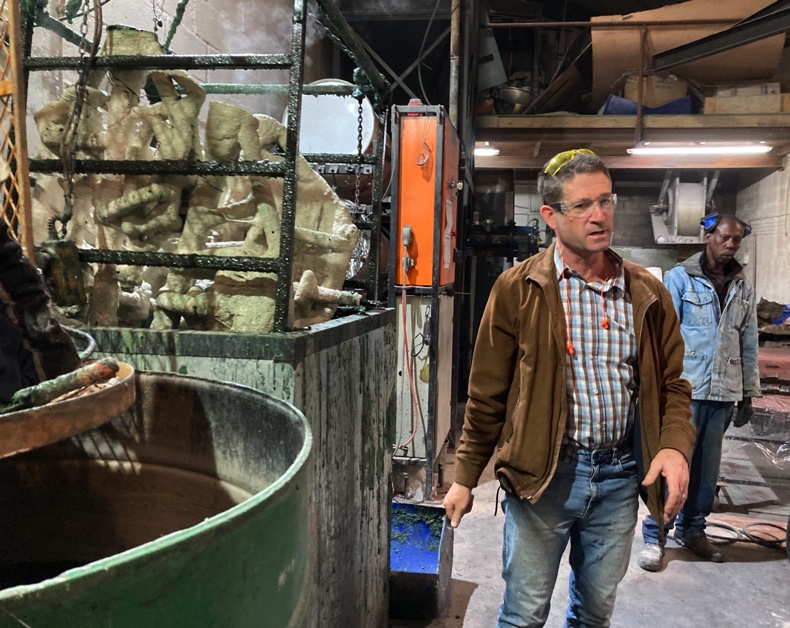
Having been instructed to change into heavy denim trousers and closed shoes, we donned safety glasses and ear plugs to cautiously follow Warren, who with his wealth of knowledge and experience led our tour through the busy and noisy foundry, explaining each step of the process, backed by long standing staff, well versed in their particular area of expertise and tradition. The entire bronze casting process or “investment casting” still relies on the ancient “lost wax” method of casting used from about 3000 B.C., with the addition of modern technology like 3D digital scanning, backed by various editing software programs, 3D printers and polyurethane robotic cutters etc. to perfect the process.
Very simply: “Casting involves making a mould and then pouring a liquid material, such as molten metal, plastic, rubber or fibreglass into the mould. A cast is a form made by this process. Many sculptures are produced by the artist modelling a form (normally in clay, wax or plaster). This is then used to create a mould to cast from. A mould can be cast more than once, allowing artists to create editions of an artwork.” – Tate. The process is a constant interplay of negative and positive space.
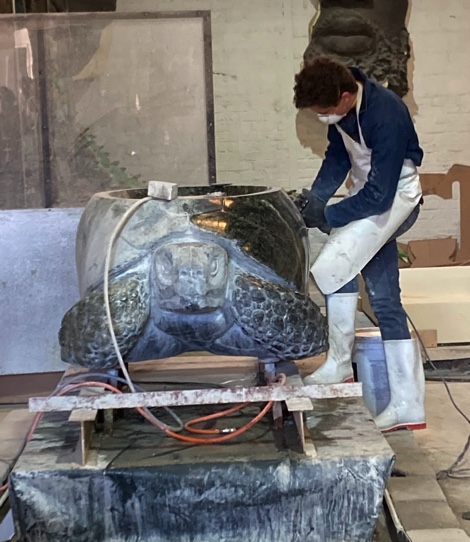
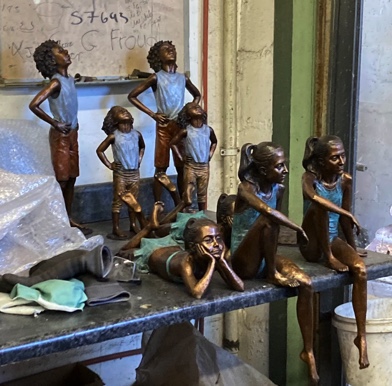
It was also fascinating at the start to see the traditional carving method of a giant turtle from an enormous block of green stone, based on a small maquette of the turtle. Something the foundry had been working on for the last year! The turtle will be bound for distant shores once completed. Artists have the possibility to sculpt with three grades of soft, mid or hard wax manufactured by the company. For casting purposes the wax portion is generally 3-4 mm thick, and once “lost” constitutes the bronze or copper portion poured / cast, with some of the smaller areas remaining solid. The green wax sculptures rest in tanks of cold water to maintain their delicate details, only to be melted and reused again. Silica and sand, sometimes with the addition of fabric, for strengthening purposes, is employed in the sand casting process.
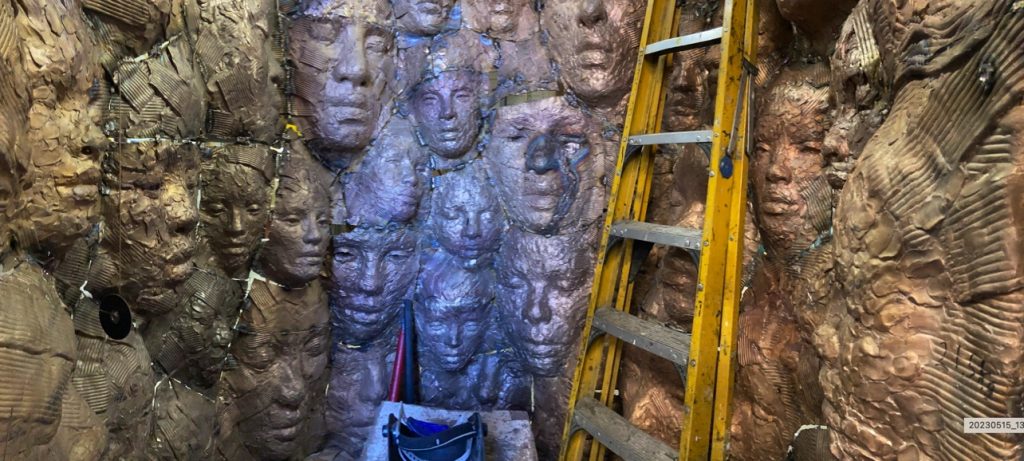
It was exciting to discover the large arched piece that we had seen Lionel Smit working on from our previous outing to his studio last term, especially as we had all helped to roll small balls of wax for Lionel to add to his work – now already cast, welded and approaching the last finishing stages.
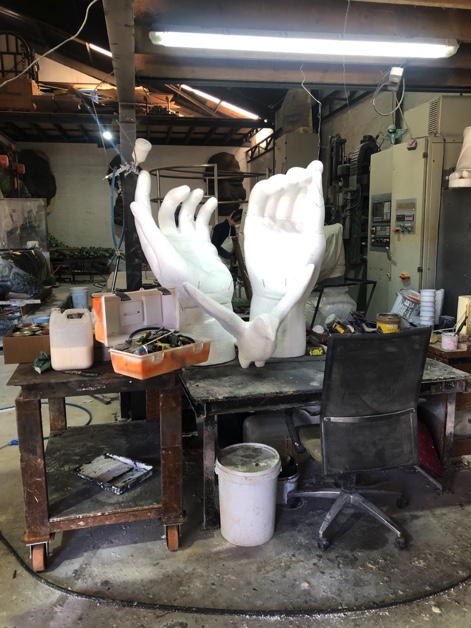
Some other enormous pieces being completed was an abstract by Kentridge, President Kruger bearing full regalia – bound for Oranje, a giant olive for Portugal, next to it – a bird in flight carrying a large suspended man beneath it. It was very exciting for the students to see the step-by-step marrying of art, design, technology and science to create some awe inspiring modern abstract, realistic and idealistic sculptures by famous local and international artists like William Kentridge, Lionel and Anton Smit, Dylan Lewis and Antonio da Silva to name but a few.
Foreign investment in art, particularly sculpture, especially wildlife, is making South Africa a viable tourist’s destination, especially with our attractive exchange rate and the quality of the work produced in the country.
Sadly we could not experience a bronze pour this time as generated power needs to be divided at the factory during the current outages, but we hope to visit the Waterfront foundry when we travel to the Zeitz MOCAA Museum of Contemporary Art in Cape Town again.
Lynda Leibbrandt, Snr Art & Design.
Some of our students also reflected on their visit:
The visit to the Sculpture Casting Services in Strand, was a thoroughly enjoyable experience. My knowledge prior to the visit of castings was barely even scratching the purpose of this age old practice. What was interesting to me was the fact that the process that they use in today’s casting has stayed unchanged for hundreds of years, and possibly for as long as humans have been casting in bronze.
Most excitingly, they were welding together individual pieces of one of Lionel Smuts upcoming sculptures, a sculpture that we had a hand in creating (all we did was roll wax balls for Lionel to attach). As an artist it lit a fire within my soul and solidified within my heart, how important art is and will always be in the history and future of humankind. Keenan – Yr 12
I really enjoyed learning about the process of casting a sculpture in bronze, copper and resin. I also found it very informative that there were so many other materials that I could use to make sculpture such as styrofoam, cardboard, and wood. I got to see interesting sculptures and learn about the artists who made them and I loved to see the amount of work that goes on in order to make these sculptures. I also found the technological side of creating the sculptures very interesting. Arella – Yr 10
I recently embarked on an expedition to a remarkable sculpture casting business. The craftsmanship was impeccable, and the attention to detail was awe-inspiring. The artists’ passion for their craft shone through in every piece. It was an enriching experience, leaving me with a newfound appreciation for the art of metalwork. The rich textures and intricate designs captured my imagination, making it a truly memorable experience. Imitha – Yr 10
My first thoughts on the sculpture casting service workshop was that it was going to be interesting to see how some sculptures around the world were made and I was not disappointed. The way they utilised the copper instead of other materials such as zinc and tin so that when the metal oxidised it would turn the desired colour they wanted and were able to manipulate that by adding a few chemicals intrigued me. The use of the glasses and ear buds also made the experience feel a little bit more special and it showed me how dangerous and difficult this line of work really was. I think it was a good outing! Ben – Yr 10