
The Counselling Corner
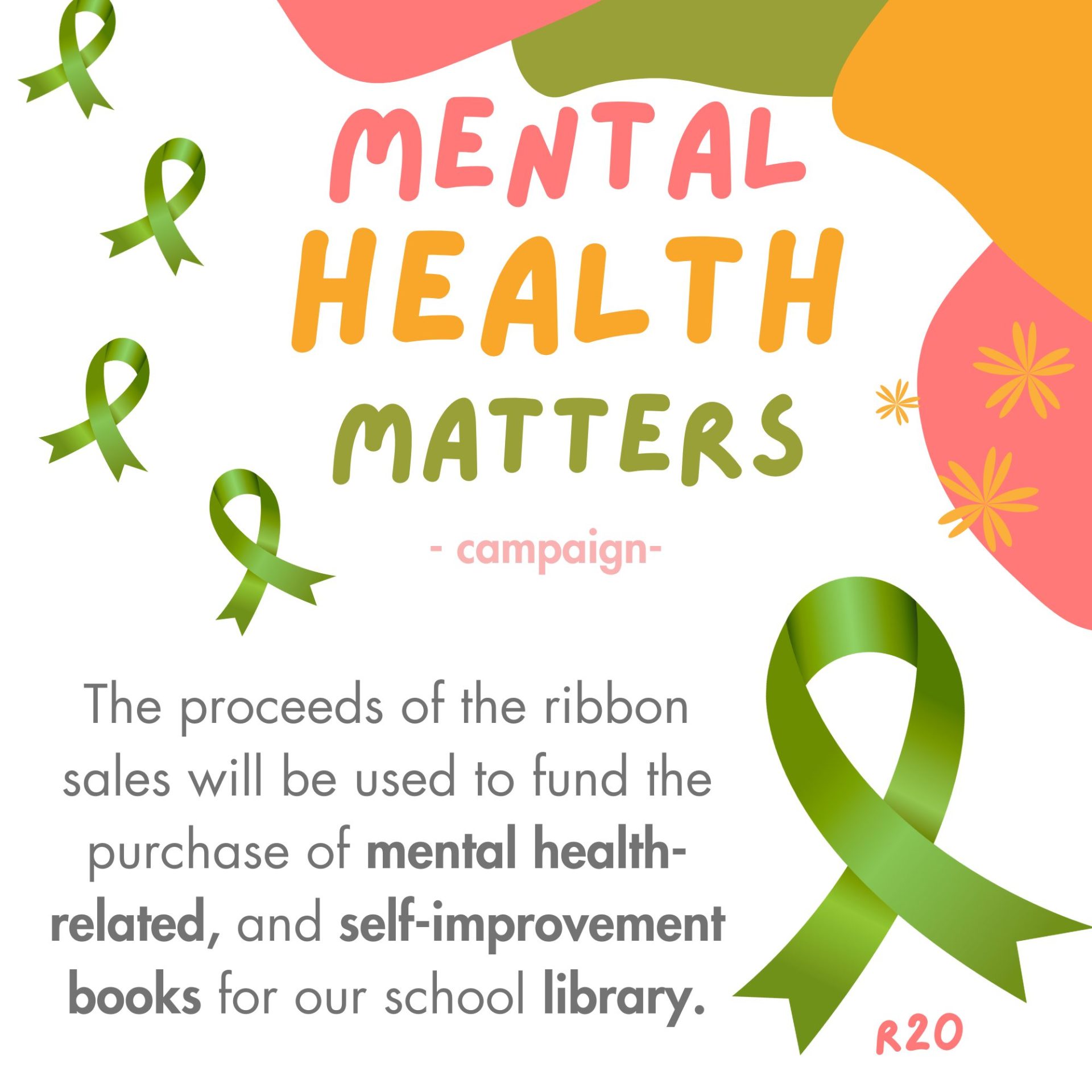
Since the start of Term 3, we have been taking a closer look at our mental health, with the aim of raising awareness of the importance that our psychological well-being plays in our overall quality of life.
What does ‘mental health’ mean?
Mental health refers to a person’s overall psychological and emotional well-being. It encompasses how individuals think, feel and behave, and it impacts how they handle stress, cope with challenges and make decisions in their daily lives. Mental health is essential for one’s ability to function effectively, maintain healthy relationships and adapt to the ups and downs of life.
Why focus on mental health at HIS?
- Focusing on mental health is vital for individual, school, societal and global well-being. It promotes a holistic approach to health, enhances personal development and contributes to building more resilient, compassionate and productive communities.
- Overall Well-being: Mental health is a fundamental aspect of overall well-being. It affects emotions, thoughts, behaviours, and the ability to cope with stress and challenges.
- Productivity and Functioning: Improved productivity and functioning in various aspects of life: better able to concentrate, make decisions, manage relationships and perform effectively in their studies.
- Physical Health: Mental and physical health are closely interconnected. Poor mental health can contribute to physical health problems such as cardiovascular diseases, immune system dysfunction and chronic conditions like diabetes.
- Reduced Stigma: Focusing on mental health helps to reduce the stigma associated with mental illnesses.
- Prevention and Early Intervention: Addressing mental health issues early can prevent them from escalating into more severe conditions. Promoting mental health awareness and providing resources for early intervention can help pupils develop healthy coping mechanisms and resilience.
- Social and Community Impact: A society that prioritises mental health is likely to have healthier communities. When individual pupils have strong mental health, they are better able to form positive relationships, contribute to their communities and engage in meaningful social interactions.
- Economic Impact: Poor mental health can have significant economic consequences due to decreased productivity, increased absenteeism and higher healthcare costs.
- Long-term Personal Development: Good mental health is essential for personal growth and development. It fosters self-esteem, confidence and the ability to set and achieve goals, contributing to a fulfilling and meaningful life.
- Resilience to Challenges: Strong mental health provides individuals with the tools to navigate these challenges more effectively, bouncing back from setbacks and maintaining a positive outlook.
- Global Impact: Mental health is a global concern. By prioritising mental health, societies can work towards reducing the burden of mental illnesses on a global scale, fostering greater empathy, understanding and support for individuals everywhere.
• Manage and express emotions in a healthy way.
• Cope with stress and life’s challenges effectively.
• Maintain satisfying relationships with others.
• Make realistic and positive decisions.
• Have a sense of purpose and fulfilment in life.
• Adapt to changes and transitions.
• Maintain a balance between work, leisure and rest.
How do we plan to raise awareness at HIS?
Each high-school year group will oversee the mental health topic they have been assigned. Their role is to do research on their topic and create awareness and intervention material which will be displayed on the high school notice board. The board will be interactive and include facts about the awareness topic, how to recognise influences and symptoms of said topic, how to get help, manage symptoms and words of encouragement.
Topics we will engage with include:
• Depression and anxiety (July- Y12)
• Bullying (August – Y9)
• Substance use/abuse (September – Y8)
• Self-esteem, self-awareness, identity (October – Y11)
• Eating disorders (November – Y10)
• Self-harm and suicide (10 September)
Our aim?
- The aim of our mental health awareness campaign is to promote understanding, acceptance and open dialogue about mental health issues within the school setting.
- We aim to raise awareness, reduce stigma and provide accurate information about mental health conditions, treatment options and available resources.
- The ultimate goal is to create a more compassionate and supportive school environment for our pupils experiencing mental health challenges and to encourage pupils to seek help when needed.
We hope you, our parents, will support this worthy campaign and help us raise the necessary funds.
You are welcome to contact me with any inquiries, comments or discussion topics you would like to see in The Counselling Corner. inge.smit@iesmail.com
Until next time. Keep well!
Mrs Inge Alberts
Dylan Lewis Studio and Sculpture Garden
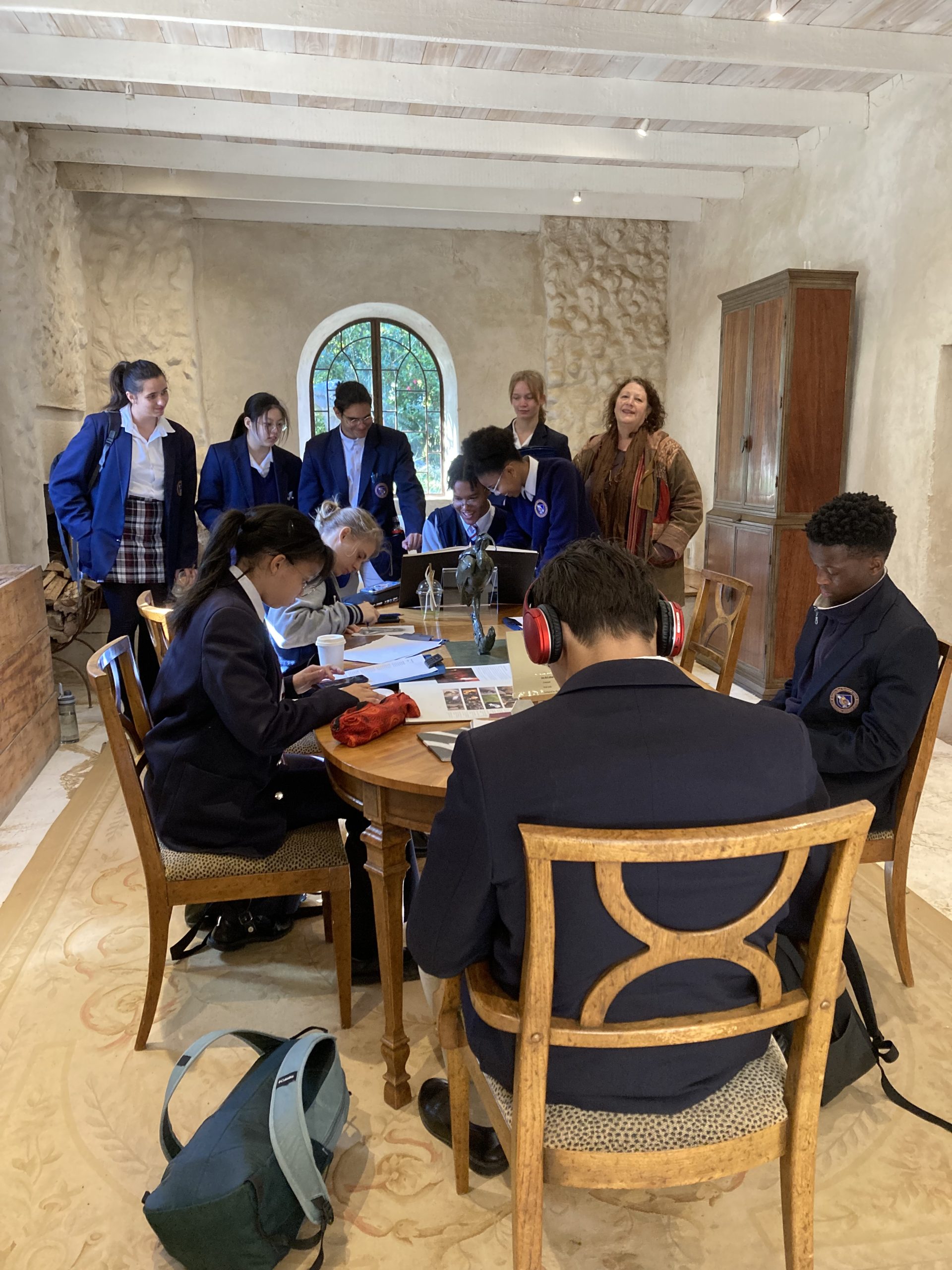
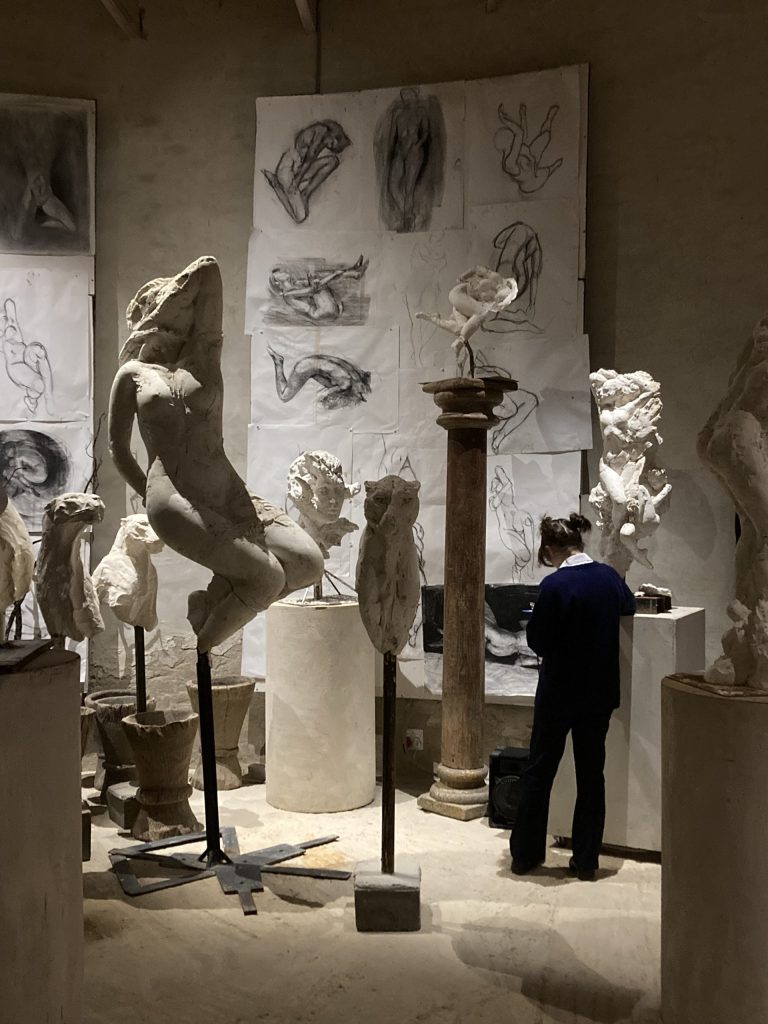
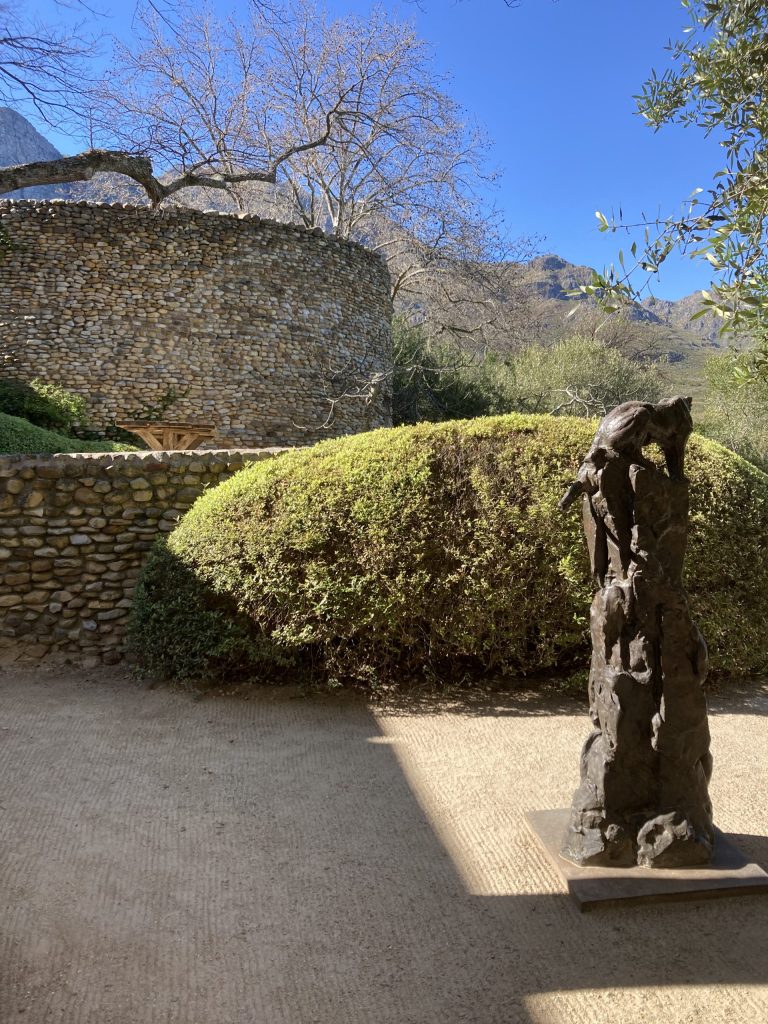
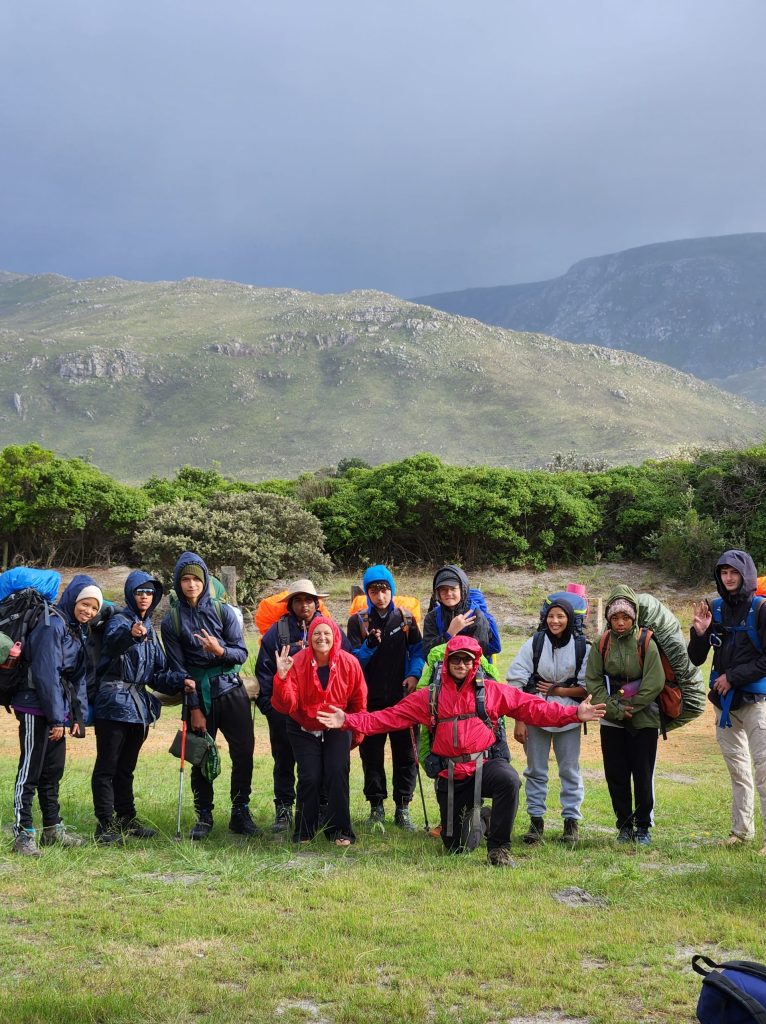
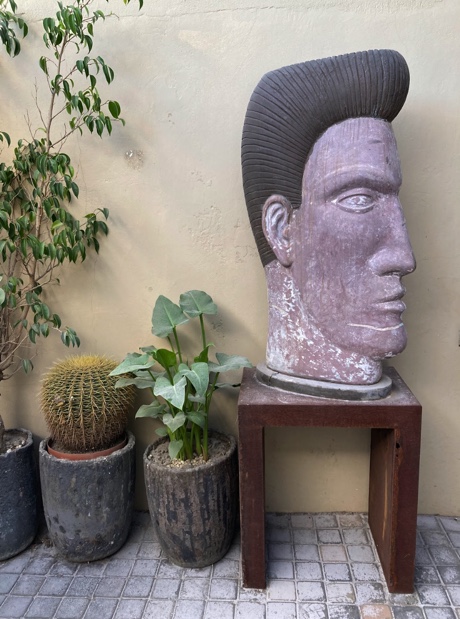
On Tuesday, the 15 August, our Year 10-12 Art & Design students headed off early to Mulberry Farm in Stellenbosch where the Studio and Sculpture Garden of the artist, Dylan Lewis is situated. The area is a mix of tame and wild, with the artist having created a mystical garden that explores the Jungian notion of ‘the wilderness within’. The project was started in 2009 when Dylan began excavating and contouring the land, his ‘canvas’. There are 60 sculptures situated along the carefully considered four kilometres of path in the seven-hectare garden and the recommended hiking route about two kilometres, that conceals and reveals each work as one moves from one area to the next.
The outing was of particular interest to the group in terms of the prescribed Gallery/Studio visits – to take additional primary source photographs for Coursework, inspiration for the Externally Set Assignment and research (especially for those working on Personal Investigations – for their A levels) as well as the creation of sketches on site.
Dylan Lewis, born in 1964, hails from an artistic family, beginning his career as a painter, but later turned to sculpture, inspired by his father’s untimely death and love for sculpting the bird form. Widely recognised as one of the world’s foremost sculptors of the animal form, Dylan initially focused on the big cats; in recent years, he used the human figure to explore our relationship with our inner wilderness. His international career spans two decades and includes exhibitions in Paris, Sydney, Toronto, Houston and San Francisco, as well as exhibitions in London, where he is among the few living artists to have held solo auctions at Christie’s in London. Sculpture certainly seems to be in the forefront worldwide currently, and we were fortunate to see some of Dylan’s pieces being cast and finished at Strand Castings on our recent visit to them last term. We are extremely privileged to have access to a multitude of creatives and venues to explore and inspire in our very midst!
Our appetite was first wet by the amazing drawings, paintings and sculptures in the Old Studio. Individually armed with maps, we had a quick orientation session in the lounge area and then set off on our bracing, independent, early morning hike through the gardens – which should take approximately anything from forty five minutes to one and a half hours at a leisurely pace if reading up about the thirty nine areas of interest, stopping to take pictures and navigate the boulders whilst crossing the various streams. The area is divided into: Paintings, Birds, African Animals, Big Cats, Leopard fragments, Human Torsos, Early Female Figures, Shamanic Female Figures, Shamanic Male Figures, Monumental Fragments and Recent Sculptures.
It was a crisp, fresh, gusty morning and the wonderful green, earthy smell of indigenous vegetation (fynbos, buchu, ericas) and the dappled early morning light made it quite a magical experience as we approached each twist and bend en-route, wondering what enchanted mythical, magical or wild creature we would next encounter along our winding pathway.
We had a short refreshment break at the Old Store Room, offering delicious coffee, tea and cake on the way back and then returned to the Studio to examine the various artefacts, books, drawings, paintings, sculptural work and remnants of castings – a perfect time to draw, take notes, work through the worksheet and reflect upon the magical journey. Sadly, it was time to leave, but no doubt we will be back for a further enchanting visit.
Mrs Lynda Leibbrandt, Snr Art & Design Teacher.
Below are some of the students’ reflections shared in response to our visit:
Arella, Year 10 – I enjoyed the scenery. It was spectacular! I also enjoyed how there were different sizes of sculptures. I was inspired by the sketches that he did and the style of sketching that he used.
Ben, Year 10 – I think the location of the garden and sculptures was a breath of fresh air as it was a new experience for me as well as being my first outdoor gallery inspection. My favourite part of the trip was the animal sculptures in the garden, especially the feline inspired ones. It was like walking through a reserve!
Imitha, Year 10 – It was a unique experience because I had never been to an outdoor gallery before. Along with the fact, I quite enjoyed the composition of the sculptures and the different types of materials used to manufacture them. My favourite part was the small area with the different paintings of landscapes. I loved the old farm cottage feel with all the stone and use of natural elements.
Gloria, Year 11 – I really enjoyed walking through the garden and looking at all of the animals – it almost felt like they were alive! I also managed to take quite a few photos for my exam topic: Walking Through.
Milla, Year 11 – The garden along with the sculptures went beautifully together, the scenery worked together well and the sculptures inside where the sketches were was interesting to see together and the thought process behind his sculptures just from the sketches. It was a lovely experience altogether.
Jensen, Year 11 – The garden and building were tranquil and serene. His art works and sculptures were unique and displayed his skill and his thought process. The placements of his artworks are complimented by the foliage in the garden and the light that he chose for that area. The architecture of the old building combined with the architecture of the new building, the Pavilion, near it was all spectacular. I would love to attend again and spend more time there.
Zoey, Year 11 – It was really cool to walk through the garden and see all of the sculptures there. It was really fascinating and interesting to see and it gave me a lot of inspiration for my artworks. The garden itself was beautiful and kept up well and overall it was a great experience.
Isabell, Year 11 – I really enjoyed walking through the peaceful atmosphere of the garden and looking at the sculptures. Personally I really enjoyed looking at the different paintings and their mediums.
Sibo, Year 11 – I like how the artist’s work is spread out on a huge “canvas”. One sculpture is further than the next and it makes my entire time there feel like a sort of adventure or journey. Some were placed among the flowers and trees and seeing the sculptures felt like I was seeing real animals enjoying their habitats. You can really see the artist’s personality on the canvas and sketches, especially the sculptures.
Keenan, Year 12 – The visit to the Dylan Lewis Sculpture Garden was an eye opening journey through the works of an amazing artist. It lit a new fire and appreciation within me, and made me rethink the relationship between art and nature. Lewis’ incorporation and placement of his sculptures in appropriate natural settings, made it seem as if the sculptures themselves were naturally creating a scene, almost like a dance between manmade handwork and the natural beauty of the African environment.
Ineke, Year 12 – I liked how he used the natural world as part of his sculptures instead of working around the beauty of nature, as well as the mechanical, rigid and rough design of the sculptures which is in direct contrast to the delicate and almost subtle look of the plant life.

Senior Art & Design – Fumation / Smoke Painting
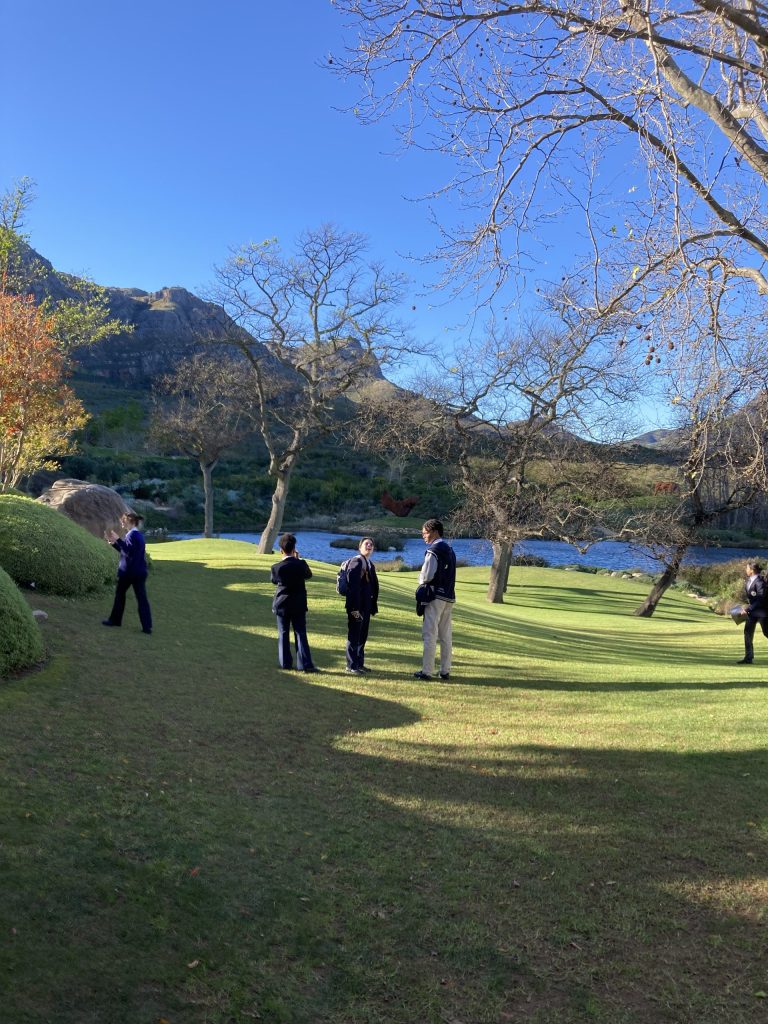
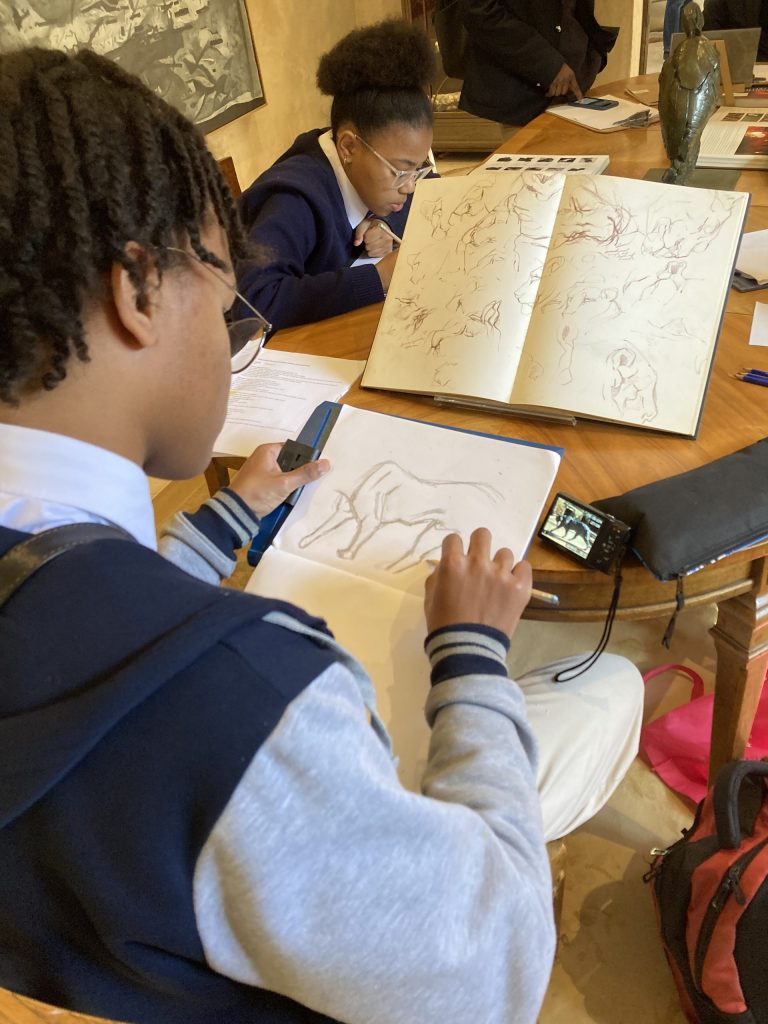
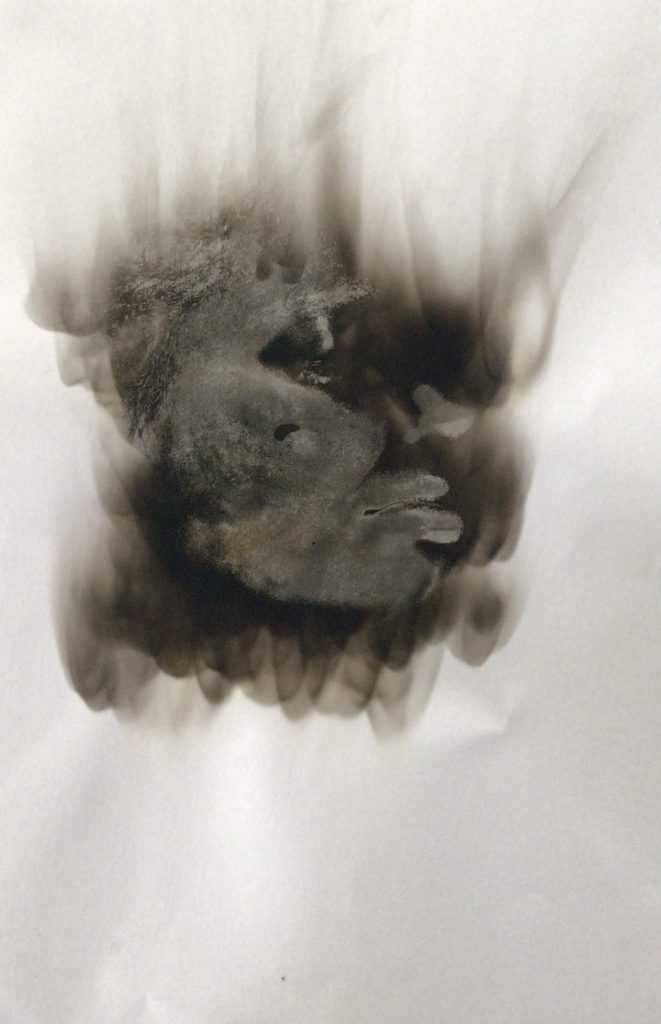
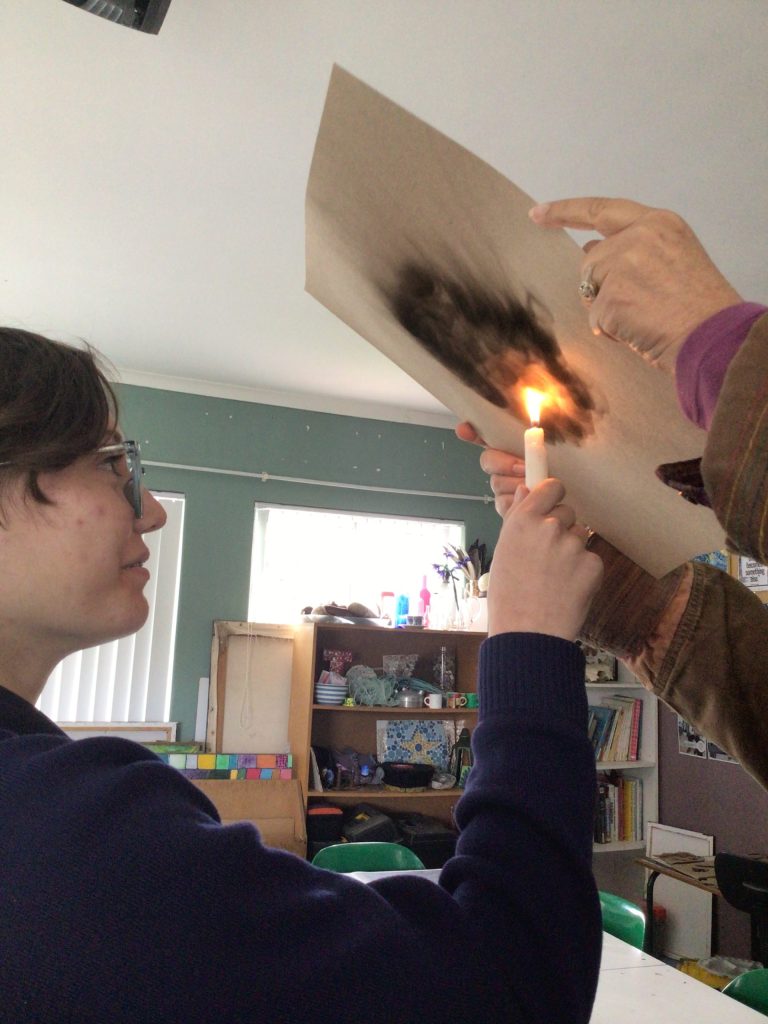
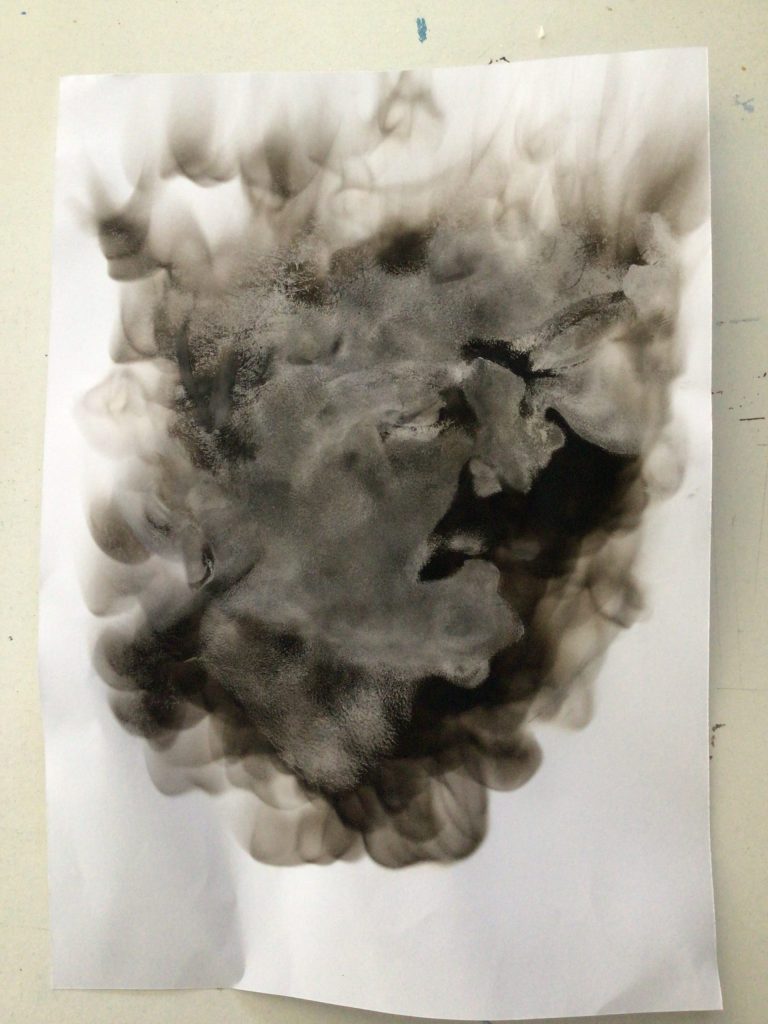
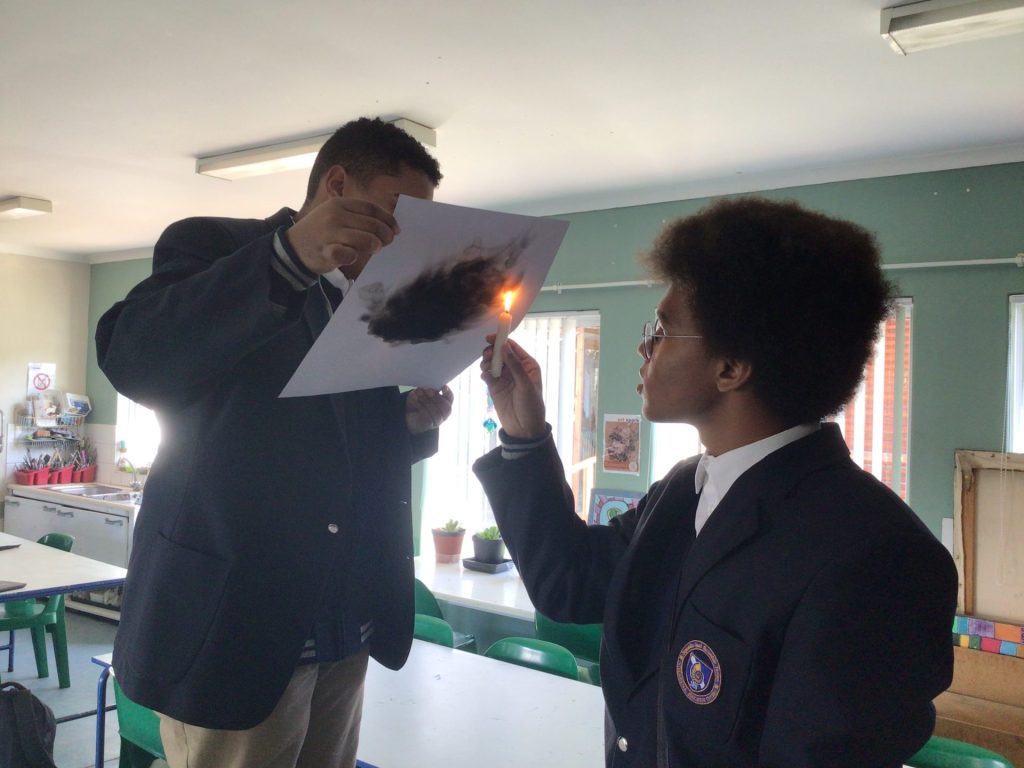
Some of our Year 11 and 12 students had great fun this week experimenting with smoke painting – a soot, candlelight and burning technique that captures interesting shapes and tones that almost seem to dance and flicker across the paper.
We had initially seen the series of works of missing children by local artist, Diane Victor: “The technique embodies the situation extremely well, missing children becoming ephemeral ghosts, flickering into life and fading back into the soot they are made from.” This inspired us to research further and discover that the father of smoke painting is Mexican / German artist, Wolfgang Paalen, who in the late 1930s often embellished his work (The Messenger,1941), emphasising images and shapes using several thin layers of oil paint or acrylic, whilst some artists use charcoal, gouache, coloured pencils and oil pastels. A technique that was presumably discovered by our early cave dwellers, some 40 000 or more years ago and re-discovered and adopted by us later on.
Salvador Dalí (Autumnal Cannibalism, 1936) also used smoke painting (or sfumage, as he coined it) on canvas and wet oil paint in his surreal style of artwork – a variation we still need to try.
It was Stephen Spazuk who demonstrated his smoke and direct facial transfer technique that inspired and left our students, Milla and Keenan’s model, Lene, all black and sooty whilst creating a self-portrait and portrait profile study. Spazuk’s most recent and disturbing series, Ornithocide, features live and dead birds juxtaposed with various man-made devices designed to kill insects, and leaves us questioning the threat we pose to the planet and living systems, including ourselves, as we poison insects, to seemingly cleanse our homes and protect our crops.
It was also fascinating to see Sheila Gallagher’s work – she painstakingly combined numerous cut stencils she had made to mask, smoke and create a life-sized rhinoceros work of art.
Keenan also experimented with another subtractive version of the technique – removing areas of soot with a putty eraser, adding extra details where necessary. This style of work needs to be handled carefully and fixed by applying a charcoal-fixative spray, whilst safety measures obviously need to be taken into consideration whilst creating the works of art.
Mrs Lynda Leibbrandt, Snr Art & Design
2023 Journey – Part 3
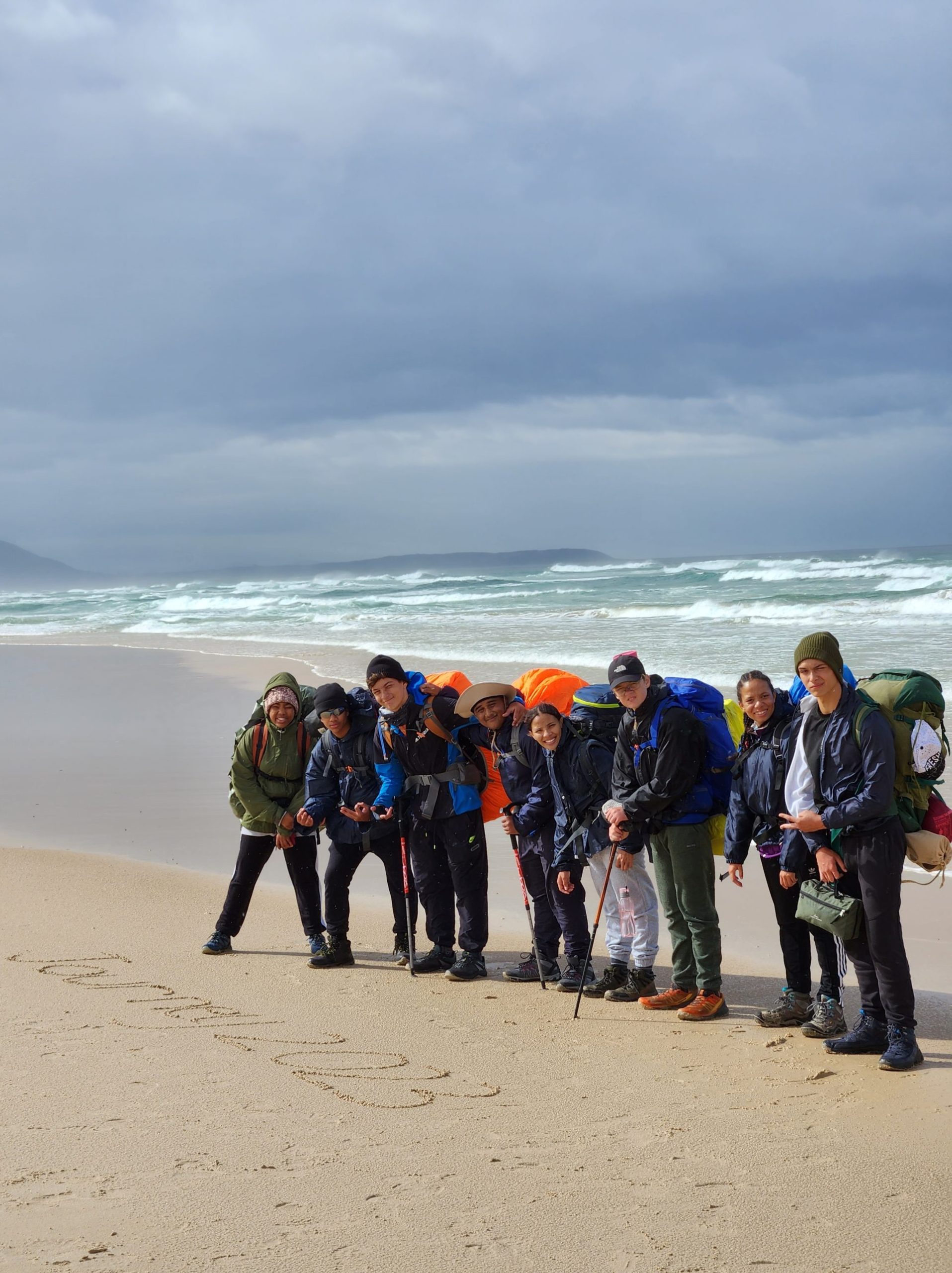
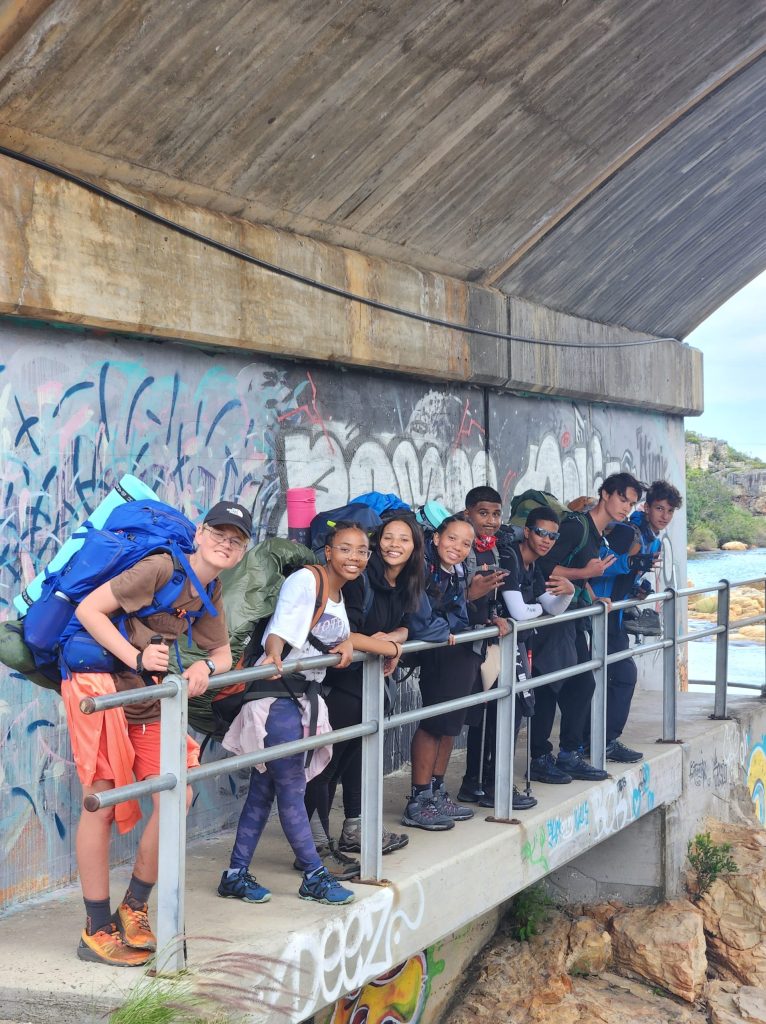
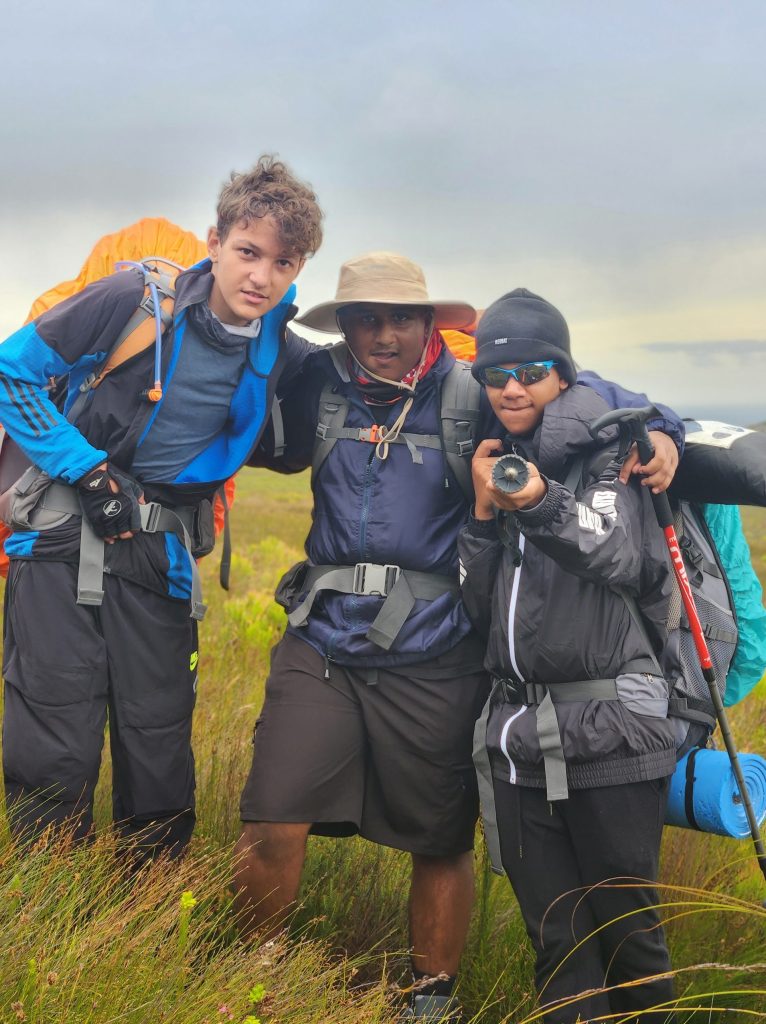
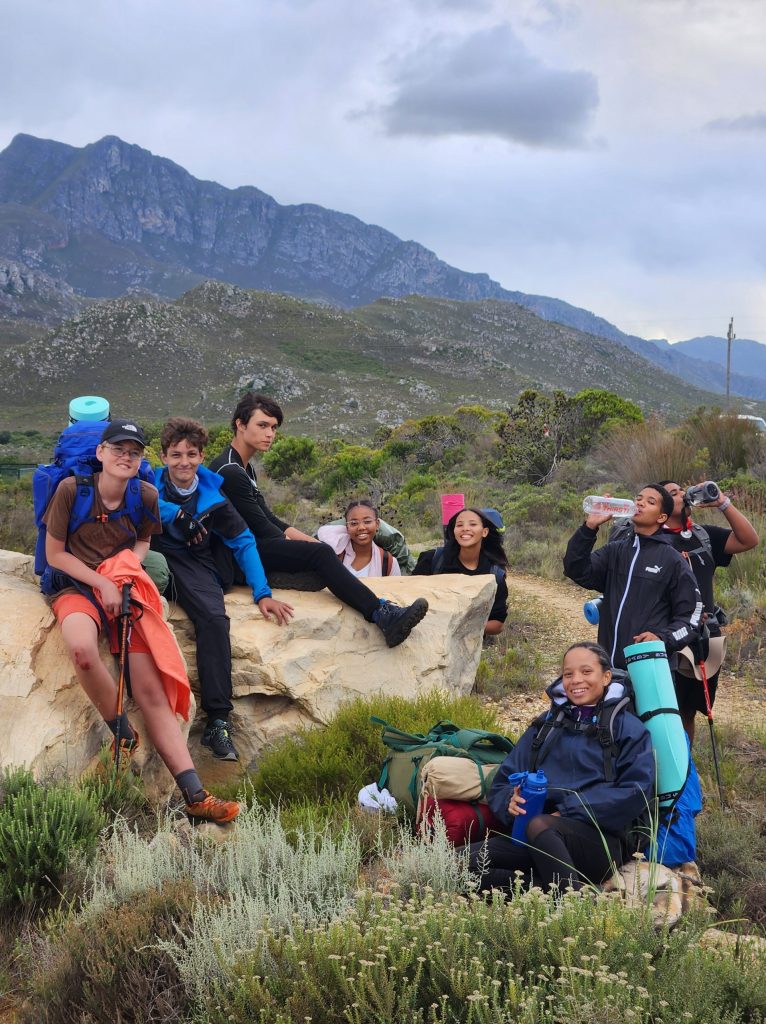
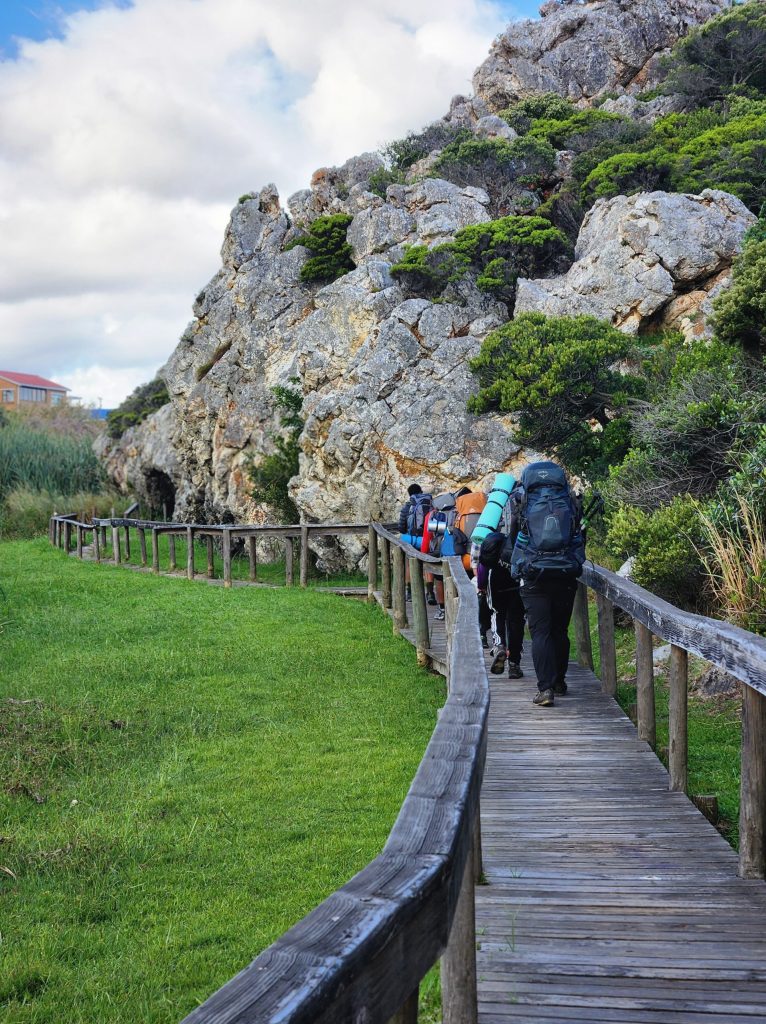
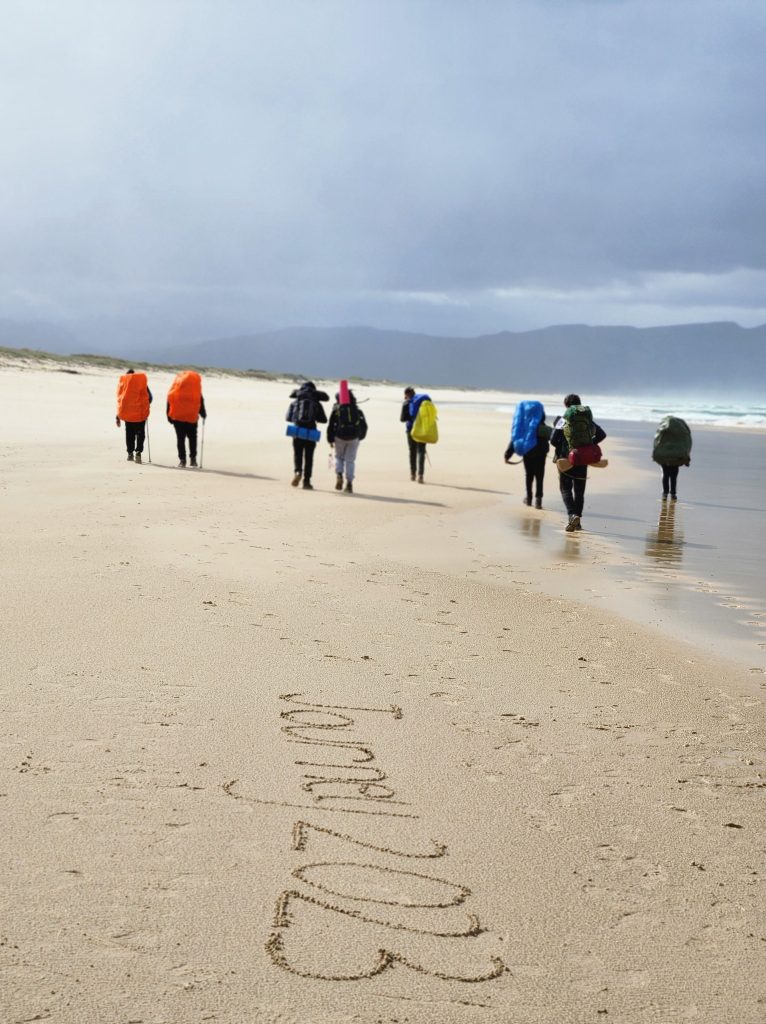
After our Year 10 Journey assembly, where our students shared their stories of the Journey with the rest of the high school, a deeper reflection was shared with the parents at our JourneyGet2Gether where everyone is invited to share a meal and watch a video compilation of all the photos. Enjoy reading some more excerpts of their reflections in this final installment.
“Because I was new to the school, I went into the Journey sort of alienated but soon everyone warmed up to me. Some started to see me as a friend but most saw me as a brother. In Johannesburg I had known my friends for many years so the most important thing for me during the Journey was to make meaningful connections with the people around me. And now looking around me, I can say that I have achieved that.
Journey, as an overall experience, was amazing. But don’t misunderstand what I mean. During Journey you realise that your highs are high and your lows are low. But by about day six that all changed. The highs, the socializing after that day’s hike, and the lows, all the walking we did, started to mix and there started to be no bad times.
Some of my highlights were cooking for everyone and spending time with my no-longer friends, but family.
On day three we walked 25km on the beach and that was the worst day of Journey. As we all remember, towards the end of the walk Zane and Ronan didn’t want to tell us how much longer there was to walk and we all collapsed on the ground on the side of the road because we could not walk anymore. But arguably, that day taught us the most about ourselves.
Journey teaches us that although there are physical mountains to climb, the first mountain you have to climb is the one in your mind. During Journey, I watched as the people around me grew mentally and changed into better people and it was amazing! I hope that I have changed for the better.
Truth be told, I don’t think I could have completed the Journey by myself, therefore I can confidently say that because of the people around me, including Ms van Zyl and Mr Kotzee, I completed Journey.”
– Kiyan Govender
“The Journey, for me personally, was an escape from reality where I discovered new things about myself and my classmates. I learnt not to take aspects of my life for granted such as family, books, a warm bed and a good hearty meal. I’ll admit in the beginning I had my resistance and an attitude for giving up but as the days went by I didn’t mind all the hiking, sore feet and heavy bag. Despite an injured knee, I persevered until I reached the finish line and I was so happy to see my best friend in the entire world, my mother.
Some friendships grew stronger, unbreakable bonds were built. I felt comfortable sharing pieces of myself because I knew I could trust these people. In short, the Journey was an adventure, one where you had no limits to be yourself, discover foreign grounds and learn to have gratitude and love for the people around you. I would not change the fact that I got injured because it helped me realise that I’m brave, courageous and that I’ll do anything to succeed and not let imaginary limits stop me.”
– Imitha Mhlungu
Ms Terena van Zyl, High School Teacher
Read More
Sculpture Casting Services
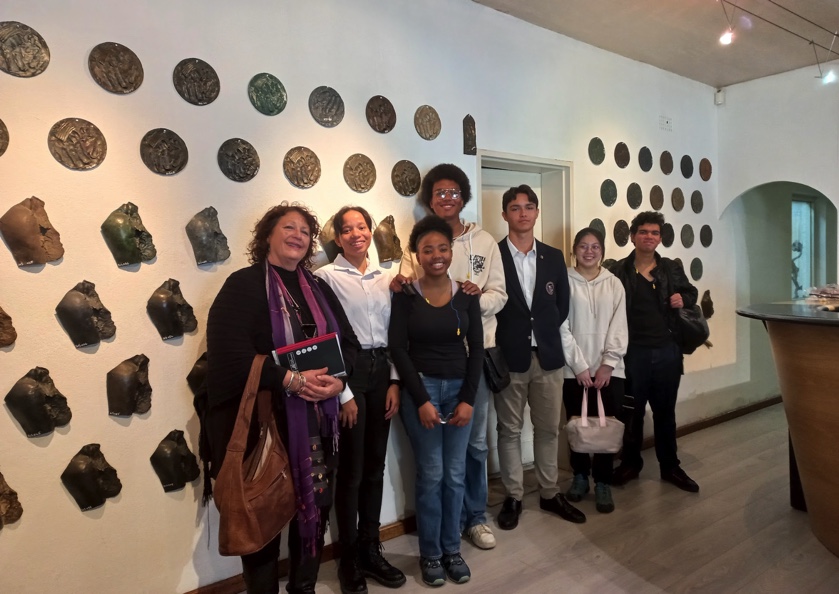
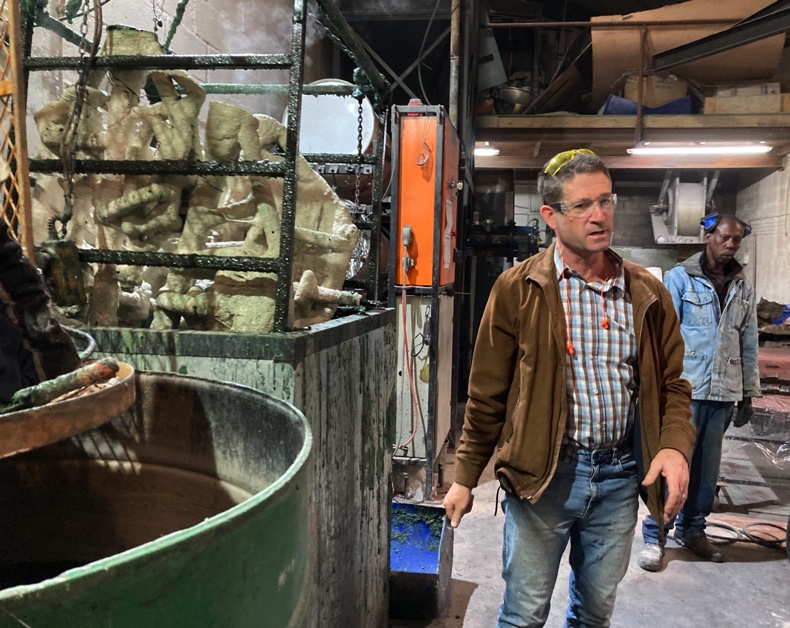
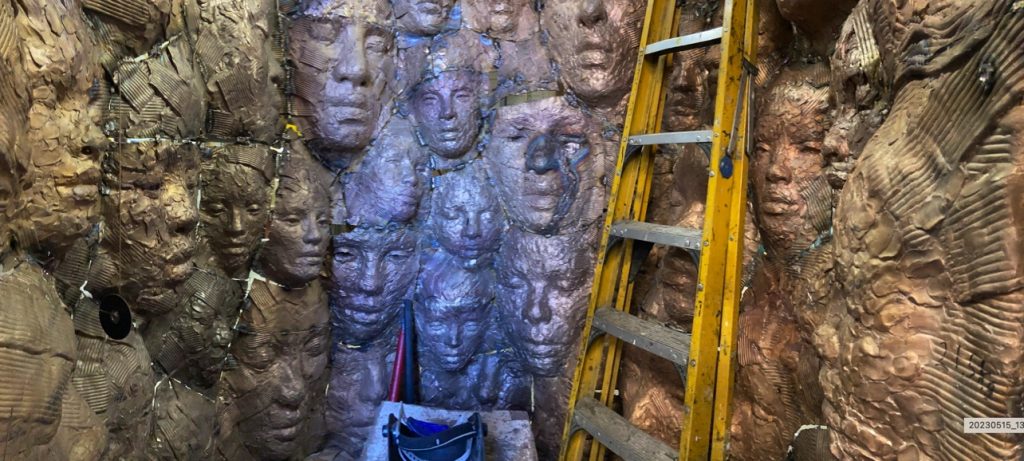
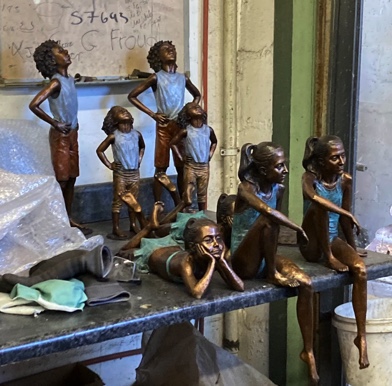
Some of our senior Art students have displayed a keen interest in sculpture, jewellery design and the casting process of late. This initiated another visit to Sculpture Casting Services in Strand on Monday this week. Sculpture Casting Services is the largest foundry in Africa, with branches in Somerset West, Strand, the prestigious Waterfront – Cape Town (foundry with gallery space) and Natal Midlands. The company is a highly specialised fine art foundry, casting from the smallest to largest sculptures (the monumental Mandela and recently a large 8m male lion) ever cast in Africa. Having grown from humble beginnings to one of the largest in Africa, it was founded by Robert Knight in the 90’s, later joined by his two younger brothers, Warren and Bruce Knight.
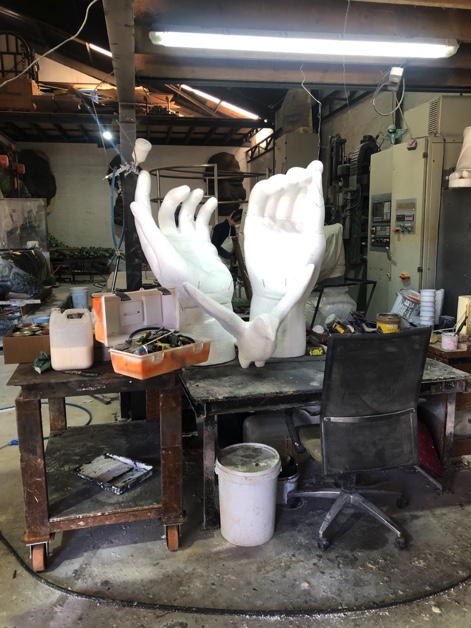
Having been instructed to change into heavy denim trousers and closed shoes, we donned safety glasses and ear plugs to cautiously follow Warren, who with his wealth of knowledge and experience led our tour through the busy and noisy foundry, explaining each step of the process, backed by long standing staff, well versed in their particular area of expertise and tradition. The entire bronze casting process or “investment casting” still relies on the ancient “lost wax” method of casting used from about 3000 B.C., with the addition of modern technology like 3D digital scanning, backed by various editing software programs, 3D printers and polyurethane robotic cutters etc. to perfect the process.
Very simply: “Casting involves making a mould and then pouring a liquid material, such as molten metal, plastic, rubber or fibreglass into the mould. A cast is a form made by this process. Many sculptures are produced by the artist modelling a form (normally in clay, wax or plaster). This is then used to create a mould to cast from. A mould can be cast more than once, allowing artists to create editions of an artwork.” – Tate. The process is a constant interplay of negative and positive space.
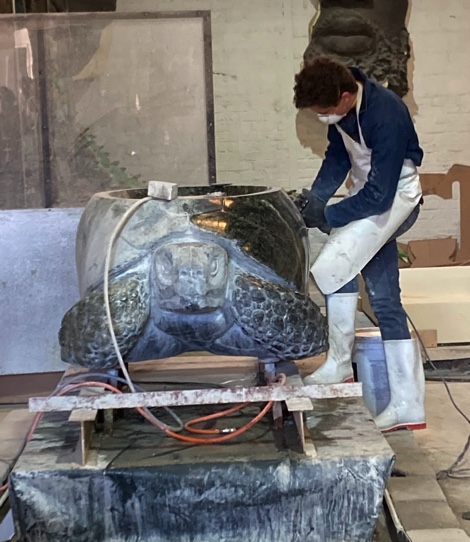
It was also fascinating at the start to see the traditional carving method of a giant turtle from an enormous block of green stone, based on a small maquette of the turtle. Something the foundry had been working on for the last year! The turtle will be bound for distant shores once completed. Artists have the possibility to sculpt with three grades of soft, mid or hard wax manufactured by the company. For casting purposes the wax portion is generally 3-4 mm thick, and once “lost” constitutes the bronze or copper portion poured / cast, with some of the smaller areas remaining solid. The green wax sculptures rest in tanks of cold water to maintain their delicate details, only to be melted and reused again. Silica and sand, sometimes with the addition of fabric, for strengthening purposes, is employed in the sand casting process.
It was exciting to discover the large arched piece that we had seen Lionel Smit working on from our previous outing to his studio last term, especially as we had all helped to roll small balls of wax for Lionel to add to his work – now already cast, welded and approaching the last finishing stages.
Some other enormous pieces being completed was an abstract by Kentridge, President Kruger bearing full regalia – bound for Oranje, a giant olive for Portugal, next to it – a bird in flight carrying a large suspended man beneath it. It was very exciting for the students to see the step-by-step marrying of art, design, technology and science to create some awe inspiring modern abstract, realistic and idealistic sculptures by famous local and international artists like William Kentridge, Lionel and Anton Smit, Dylan Lewis and Antonio da Silva to name but a few.
Foreign investment in art, particularly sculpture, especially wildlife, is making South Africa a viable tourist’s destination, especially with our attractive exchange rate and the quality of the work produced in the country.
Sadly we could not experience a bronze pour this time as generated power needs to be divided at the factory during the current outages, but we hope to visit the Waterfront foundry when we travel to the Zeitz MOCAA Museum of Contemporary Art in Cape Town again.
Lynda Leibbrandt, Snr Art & Design.
Some of our students also reflected on their visit:
The visit to the Sculpture Casting Services in Strand, was a thoroughly enjoyable experience. My knowledge prior to the visit of castings was barely even scratching the purpose of this age old practice. What was interesting to me was the fact that the process that they use in today’s casting has stayed unchanged for hundreds of years, and possibly for as long as humans have been casting in bronze.
Most excitingly, they were welding together individual pieces of one of Lionel Smuts upcoming sculptures, a sculpture that we had a hand in creating (all we did was roll wax balls for Lionel to attach). As an artist it lit a fire within my soul and solidified within my heart, how important art is and will always be in the history and future of humankind. Keenan – Yr 12
I really enjoyed learning about the process of casting a sculpture in bronze, copper and resin. I also found it very informative that there were so many other materials that I could use to make sculpture such as styrofoam, cardboard, and wood. I got to see interesting sculptures and learn about the artists who made them and I loved to see the amount of work that goes on in order to make these sculptures. I also found the technological side of creating the sculptures very interesting. Arella – Yr 10
I recently embarked on an expedition to a remarkable sculpture casting business. The craftsmanship was impeccable, and the attention to detail was awe-inspiring. The artists’ passion for their craft shone through in every piece. It was an enriching experience, leaving me with a newfound appreciation for the art of metalwork. The rich textures and intricate designs captured my imagination, making it a truly memorable experience. Imitha – Yr 10
My first thoughts on the sculpture casting service workshop was that it was going to be interesting to see how some sculptures around the world were made and I was not disappointed. The way they utilised the copper instead of other materials such as zinc and tin so that when the metal oxidised it would turn the desired colour they wanted and were able to manipulate that by adding a few chemicals intrigued me. The use of the glasses and ear buds also made the experience feel a little bit more special and it showed me how dangerous and difficult this line of work really was. I think it was a good outing! Ben – Yr 10
Read More
The Counselling Corner
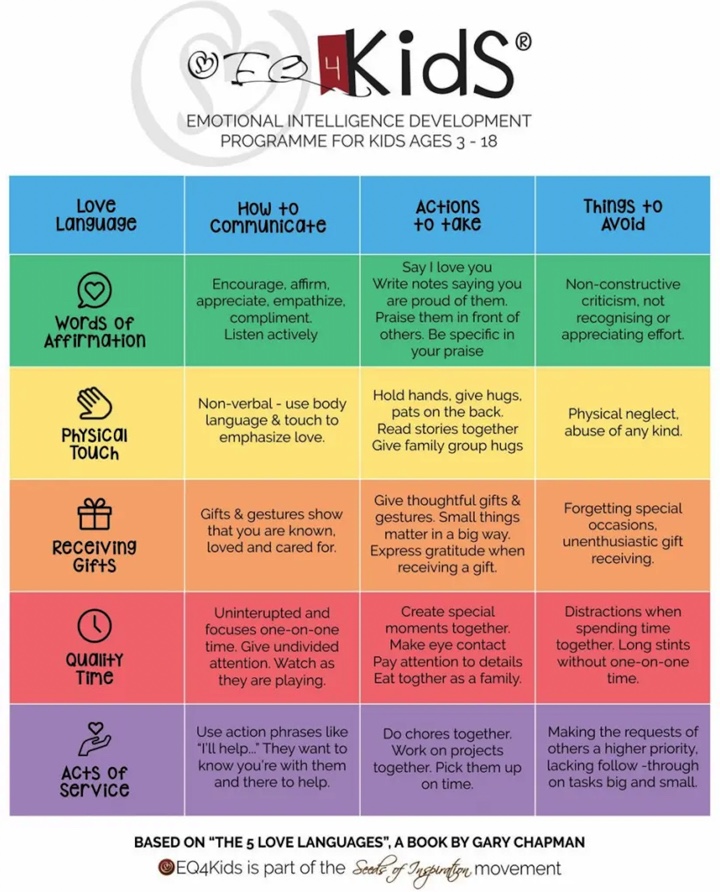
HOW TO LOVE YOUR CHILD – 5 Love Languages
The Five Love Languages is a concept developed by Dr Gary Chapman. According to Chapman, there are five primary ways that people express and feel loved:
- Words of Affirmation: Verbal compliments and affirmations of love and appreciation.
- Quality Time: Giving undivided attention to the person you love.
- Receiving Gifts: Giving and receiving tangible gifts as symbols of love and affection.
- Acts of Service: Helping and serving the person you love in practical ways.
- Physical Touch: Holding hands, hugging, kissing, and other forms of physical affection.
- Words of Affirmation: If your child’s primary love language is words of affirmation, they will likely feel loved when you tell them how much you love them, give them verbal compliments and express your appreciation for the things they do. You can also write them notes or cards, or tell them how proud you are of their accomplishments.
- Quality Time: If your child’s primary love language is quality time, they will feel loved when you spend undivided time with them doing things they enjoy. This could mean playing a game with them, reading a book together, going for a walk or having a special “date” with just the two of you.
- Receiving Gifts: If your child’s primary love language is receiving gifts, they will feel loved when you give them small tokens of your affection. This could mean buying them a toy or a book, or making them a special craft. It is important to note that the gift doesn’t have to be expensive; it’s more about the thought behind it.
- Acts of Service: If your child’s primary love language is acts of service, they will feel loved when you help them and do things for them. This could mean cooking their favourite meal, doing their laundry or helping them with a project.
- Physical Touch: If your child’s primary love language is physical touch, they will feel loved when you give them hugs, hold their hand and give them kisses. This could also include other forms of physical affection such as massaging their shoulders or cuddling while reading a book.
The best way to know for sure which language your child might feel most loved by is through observation, trial and error. Over time you will be able to find out what your child responds to best, as well as communicate to them that you love them through that language, and they will be more receptive to you, and will feel more loved. Follow the link to the Love Languages Quiz to find out your child’s most prominent love language: https://5lovelanguages.com/quizzes
-Inge Smit
A day in the High School
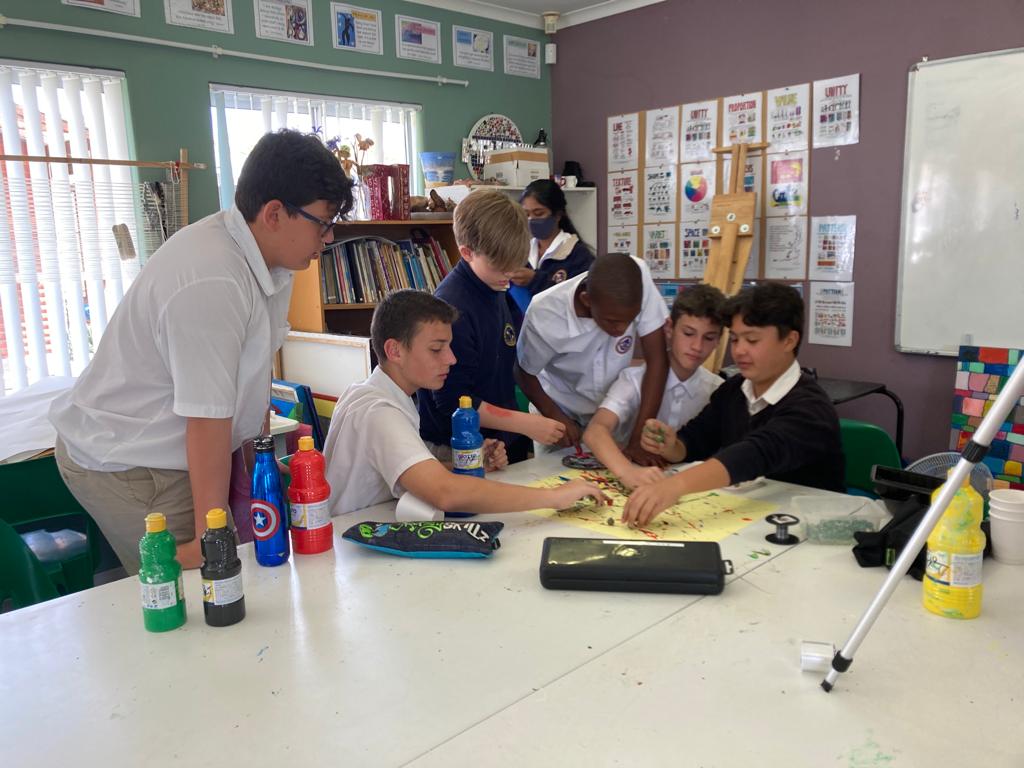
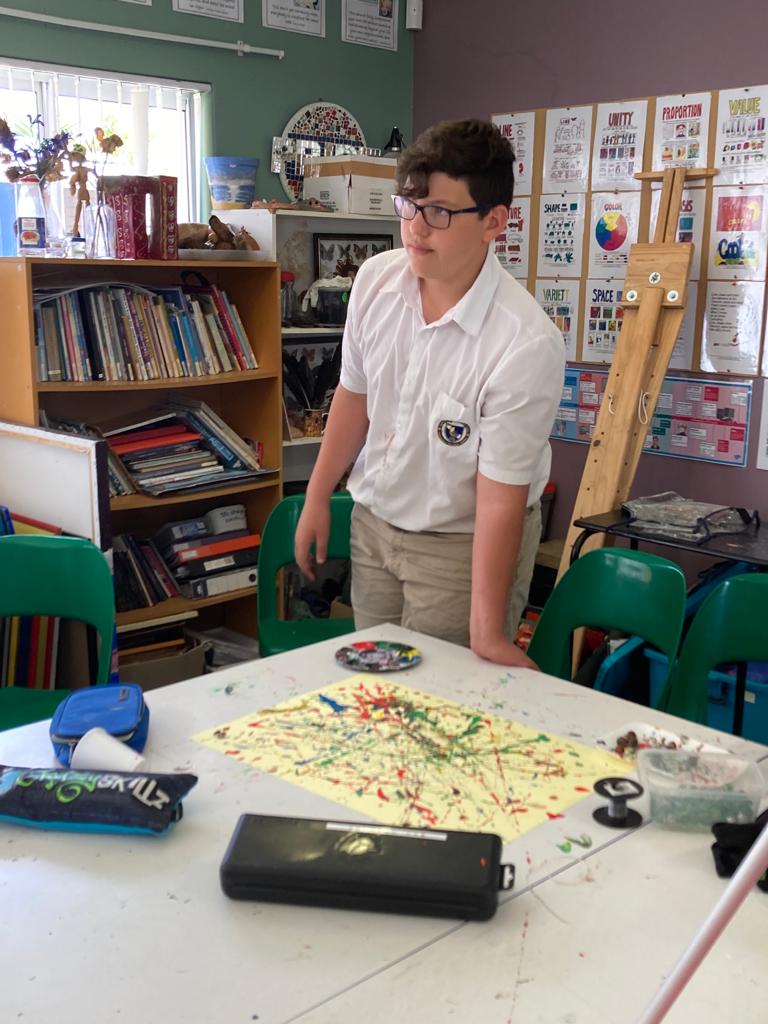
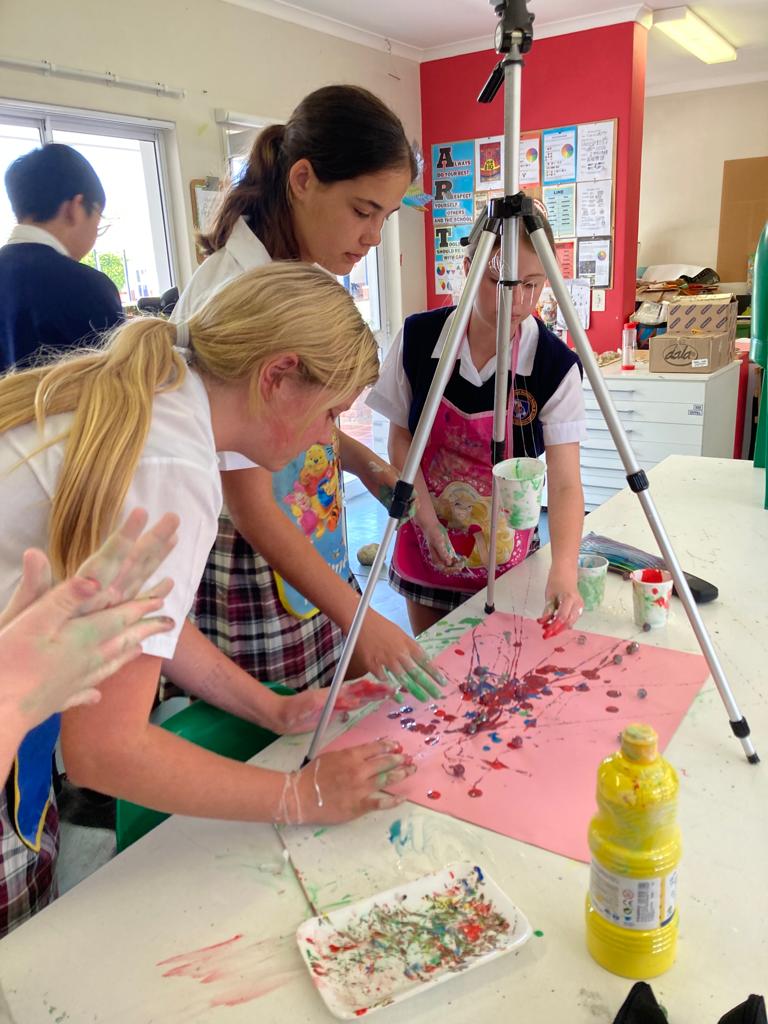
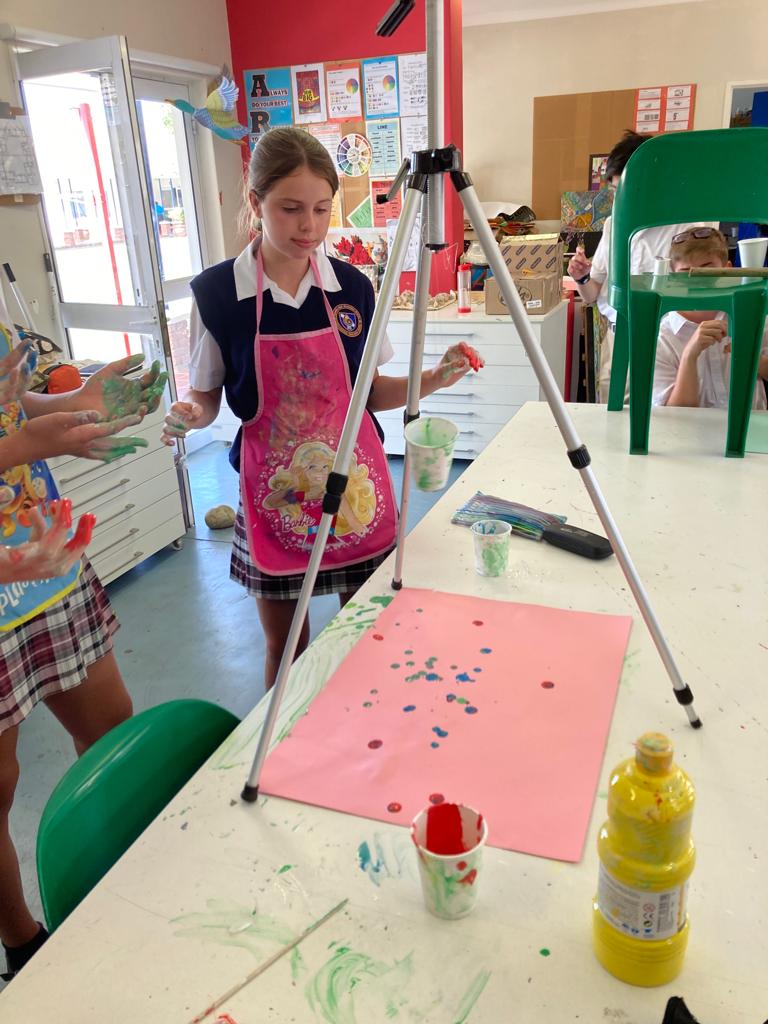
Our Year 7s spent the day in our High School today getting a feel for what awaits them in 2023! They had a number of different lessons throughout the day and thoroughly enjoyed joining the Art & Design class to create a Pendulum Painting using Science, Technology, Engineering, Art, and Math, inspired by the abstract painting of artist, Jackson Pollock. The lesson was a bit short to explore the project fully but a lot of fun (and mess) was had.
The class divided up into three groups. One group made use of a camera tripod, the other group supported a narrow plank of wood between two chairs to create the environment to set the pendulum in motion, whilst the third group experimented with paint dipped marbles which they rolled across the page to create yet another abstract piece. The activity experiments with the scientific principles of inertia and motion, using gravity and diluted tempera paints to make geometric patterns similar to a Spirograph.
So what is the Science behind this project? Sir Isaac Newton’s 1st Law of Motion –The velocity of an object will remain constant unless acted upon by an unbalanced force.
Isaac Newton was a scientist, mathematician and astronomer who was born in England in 1643. He is considered one of the most important scientists in history; even Albert Einstein said that Newton was the smartest person that ever lived.
Newton’s First Law of Motion (he came up with three) says that any object in motion will continue to move in the same direction and speed unless forces act on it. Simply, that means things cannot start, stop or change direction all by themselves. For example, if you kick a ball, it will fly forever unless some sort of forces act on it! As strange as this may sound, it’s true. But when you kick a ball, forces start to act on it immediately. These include resistance or friction from the air, which slows the ball down, and gravity, which pulls the ball down to the ground.
What is Inertia?
Inertia is the tendency of a body to resist a change in motion or rest. For example, when a vehicle stops, you tend to jerk forward before coming to a complete stop. In the same way, you will jerk backwards when the vehicle begins to move. This phenomenon is described by Newton’s First Law of Motion; objects tend to “keep on doing what they’re doing,” unless disturbed.
What is a Pendulum?
A pendulum is a fixed object, hung from a point so that it can swing freely back and forth due to the force of gravity. When the object is at its highest point, or furthest from the ground, it has maximum potential energy. When the object oscillates (swings) back and forth, it repeatedly converts its energy in motion due to the gravity on the swing.
How does all of this relate to the art of Pendulum Painting?
By adding paint to the pendulum in this project, one can demonstrate the science behind the Laws of Motion and inertia while making dramatic works of art. Though Jackson Pollock may never have used a pendulum to create his famous paintings, he did use the motion of his whole body to cover his large canvases with paint. One can observe the similarities and differences between the artworks created and the paintings of Jackson Pollock.
Sir Isaac Newton (1642-1727)
A pendulum works by converting energy back and forth, a bit like a roller coaster ride.
If there were no friction or drag (air resistance), a pendulum would keep moving forever.
About the Artist: Jackson Pollock
Jackson Pollock (January 28, 1912 – August 11, 1956) was an American painter and a major figure in the abstract expressionist movement. As a young boy, Pollock would explore Native American culture and Mexican muralist works while on land surveying trips with his father. This exposure played a major role in his earliest art influences. When he turned 18, Pollock moved to New York City to study art with his older brother Charles. During these studies, he adopted his rhythmic style of painting.
Pollock was widely praised for his ‘action painting’ — a technique that used the force of his entire body to pour, splash and fling liquid paint onto a horizontal surface. Hardened brushes, sticks and even basting syringes were used as paint applicators. Unlike traditional upright paintings, Pollock’s paint literally flowed from his chosen tool onto the canvas. With the ability to apply paint from all directions, he added new dimensions of movement to his works, which is why they were often described as unpredictable and undisciplined.
Our experiments and text were inspired by the Neuberger Museum of Art Education team.
Written by: Mrs Lynda Leibbrandt, High School Art Teacher
The Counselling Corner
Welcome to the Counselling Corner: A space where we will discuss all things mental health.
October was Mental Health Awareness Month and we focused on EMPATHY. Empathy is the ability to understand and share the feelings of another (whether you have experienced something similar to them or not). This is an active process whereby you empower another rather than becoming stuck with them in the unpleasant emotions by taking their emotions on as your own.During last week our High School and Primary School students were paired up with an ‘empathy partner’ and given the opportunity to develop their empathetic skills by getting to know their partner better and getting a glimpse of what it is like ton walk in their shoes. Various questions were posed which had to be answered by each ‘empathy pair’ to help encourage empathetic listening and understanding.Some questions included:
- You have been asked to relocate to a new location, and you can have no involvement in your old life. You are only allowed to take five possessions with you. What would you take and why?
- What is your favourite… food, colour, person, season, movie, song, animal, book, game, etc.
- What is your most precious possession?
- What is one of your most memorable experiences?
- What does a day in your life look?
- What object represents you, and what object would you say represents me (after learning more about me)?
- How would you describe happiness (what does happiness look like to you)?
- How would you define love?
- What is your greatest strength and weakness?
- What was a hard thing/season/experience you had to go through?
- What characteristic do you admire in me (your empathy partner)?
- What would you like your future to look?
- What is most important to you in life?
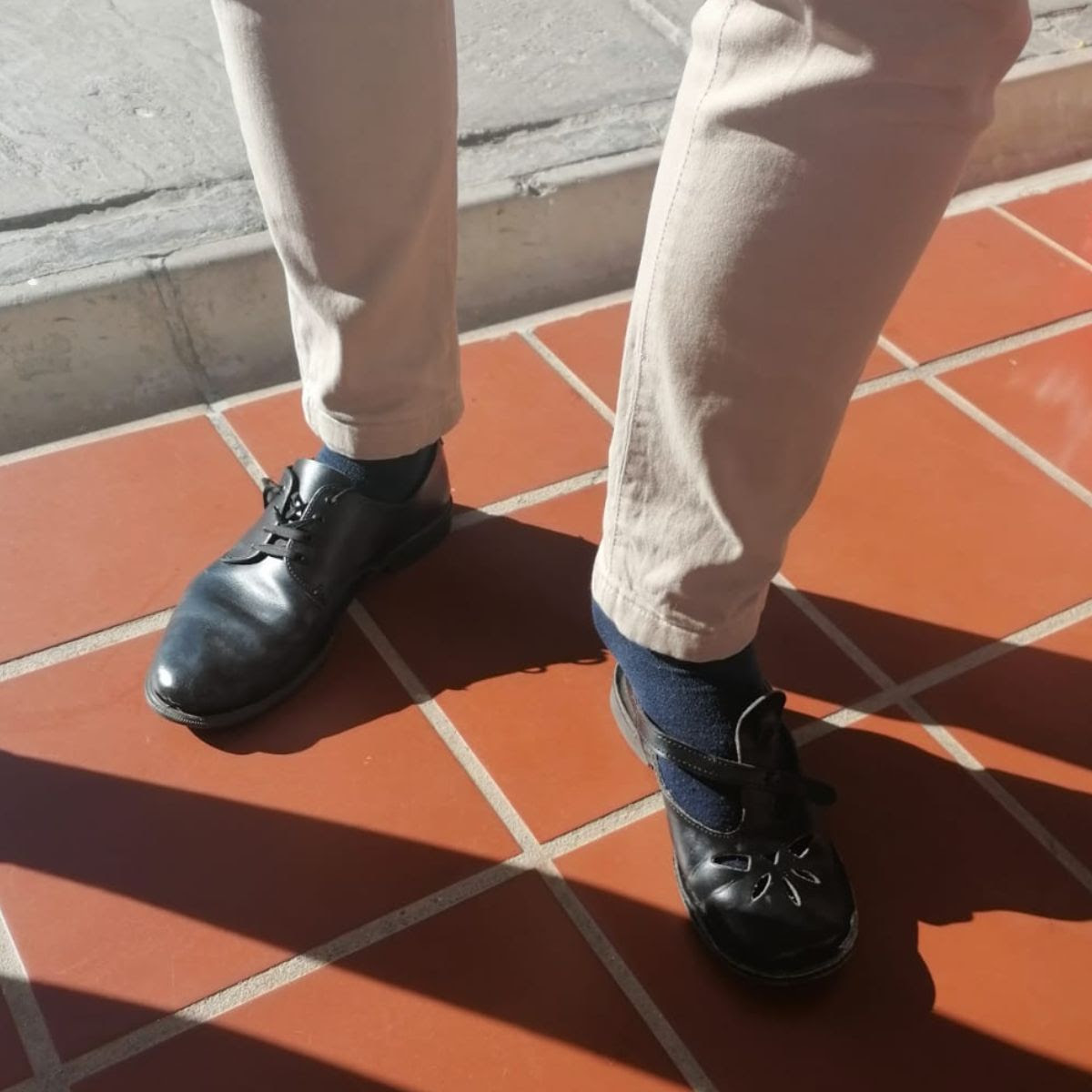
To conclude Empathy Week each student had the opportunity to literally walk in the shoes of their partner on Friday and share (with their class) what their partner’s life is like and what they have learned about them during the week.
For more information on empathy and Empathy Week at HIS have a look at the following video: https://youtu.be/8bgCr94k4J8
How to cultivate empathy
8 Strategies to develop empathy
Our ability to be empathic to others is not fixed; it can be developed. Making changes, often small ones, in our daily lives can significantly impact our ability to empathize with individuals and groups.
Cultivate curiosity
Develop an insatiable curiosity about the particulars of those you meet.
- Spend time with people you know less well, and ask them about themselves, how they are, and what their life is like.
- Follow people from many different backgrounds – religious, ethnic, political – on social media and listen to what they have to say.
- Be present with people when you talk to them. Recognise the subjects that make them passionate, happy, or sad.
- Visit new places, meeting local people while immersing yourself in their way of life.
Step out of your comfort zone
Learn something new or travel, and see how it feels to be out of your comfort zone:
- Experience what it is like to be unable to do something or not know how to interact with where you are.
- Reach out for support.
- Accept how helpless you may feel at times, and let it humble you.
- Humility can be a useful path to empathy.
Receive feedback
Ask for feedback from friends, family, and colleagues regarding your active listening and relationships skills.
- How could you improve?
- What opportunities did you miss?
Examine your biases
We all have biases, and they impact our capacity for empathy. Often without knowing, we judge others on the way they look and how they live.
- Find opportunities to mix with people from other backgrounds.
- Talk to people about the important things in their lives.
- While recognizing the similarities we share, be interested, without judgment, in the differences.
- Donate to charities that provide support to other communities.
Walk in the shoes of others
- Understand what it is like for people in other situations. How do they live, work and share?
- Spend time with others, and understand their worries. What gives them happiness? What are their dreams?
- Build relationships with people you see but don’t usually connect with.
Difficult, respectful conversations
While it can be hard to challenge or be challenged by alternative points of view, a few simple lessons can help.
- Listen and don’t interrupt.
- Be open to new and different ideas.
- Apologize if you have hurt someone’s feelings by what you have said.
- Research the issue. Understand where a point of view has come from and how it affects the people involved.
Join a shared cause
Research has shown that working together on community projects can help heal differences and divisions and remove biases.
- Find a community project.
- Join others who have been through similar life experiences.
- Join a group from different backgrounds and help out at school, political or church events.
Read widely
Reading fiction, nonfiction, newspapers, journals, and online content that captures people’s lives from different backgrounds increases our emotional intelligence and our capacity to empathise.
- Find writers with unique stories to tell.
- Enter the lives of their characters, their feelings and thoughts.
You are welcome to contact me with any inquiries, comments, or discussion topics you would like to see in The Counselling Corner.
- smit@iesmail.com
Until next time. Keep well!
-Inge Smit
Read More
Mother’s Day Chocolates
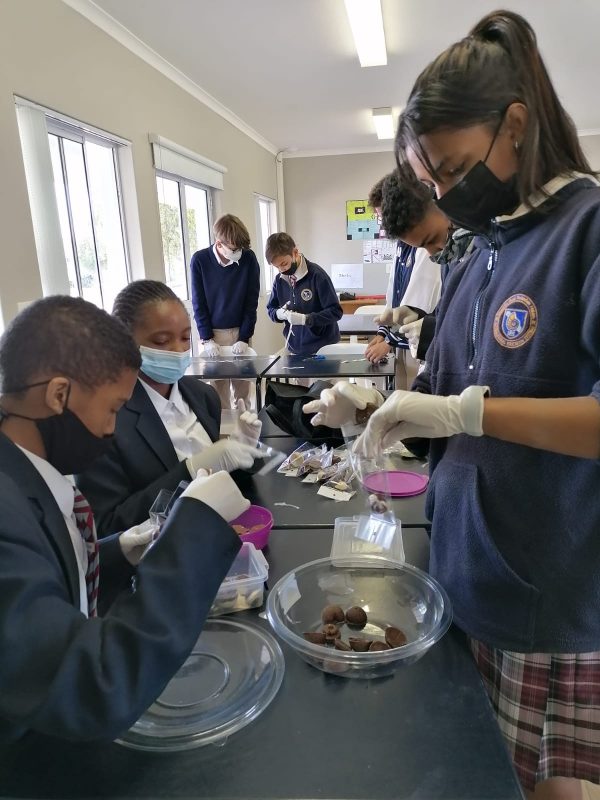
For Mother’s Day, a couple of weeks ago, our Year 8s worked together as a team and made more than 800 chocolates to be delivered to the school for Mother’s Day. They had so much fun!
This activity reminded me of the importance of giving children the opportunity to get involved in the kitchen and allowing them cook or bake. I know it can be messy, and the results might not be great (at first). However, aren’t these life lessons themselves? We learn to cope with frustration, how to react when things get messy, and reflect on what can be done next time to avoid the same outcome? Practice makes perfect. There are endless lessons when cooking and so many benefits for children as young as toddlers and all the way to adolescence.
Below, I have compiled a list of reasons why you should let your child cook:
- It is an important life skill: imagine giving your child the confidence and independence to cook. Many people reach adulthood not knowing how to cook mainly because they were never given the opportunity to do so when young.
- Builds relationships: Cooking with your child is a wonderful, fun and proactive way to spend time together and bond with them. Moreover, cooking together fosters cooperation and communication among the family.
- Develops Fine Motor Skills: A lot of cooking tasks (like pouring, rolling, stirring, sprinkling) allow young children to refine their fine-motor skills.
- Requires following instructions: To make sure the end product tastes good, they need to follow recipes and stick to specific quantities, times and procedures.
- Develops reading skills: For the younger children, you can start with recipes that include visual ingredients and ask them to list them for you. For older children, and teens look for easy-to-follow recipes (or write them yourself) and let them read them and follow through. There will be new vocabulary they will learn.
- Develops Maths Skills: Believe it or not, cooking involves lots of Maths, from simply counting, to taking measurements, to working with fractions, etc.
- It is a creative outlet: Young kids love to be involved in deciding what is for dinner and to choose different ingredients as well as experiment with textures and flavours. Older children can use their creativity in developing a dish or meal and the presentation, or using whatever is in the fridge and/or pantry to make a meal. Master Chef here we go!
- Creates opportunities to serve: Whether it is helping to cook dinner for someone going through a hard time, making a snack for a family member, or making chocolates for a fundraiser, food is such an amazing way to show love, to serve and care for others.
- Gives appreciation for food: When cooking a meal from scratch, one realizes how much effort, time, and ingredients are required for one meal. This is an opportunity to be thankful for having access to food, to talk about food wastage and appreciate the cook’s effort.
- Relieves mom or dad: This might not be the case at the beginning (especially with younger kids) but imagine one day not having to make your child’s lunch box, or their afternoon snack or perhaps even having the night off courtesy of your child! Making food can become another way of helping at home.
Written by: Mrs Mariana Quintero, Spanish Teacher
Read More
Erfeniskos (Heritage Food)
Our Year 9 Afrikaans class explored some of our inheritance handed down from our families and discovered that food, the atmosphere in the kitchen while making it and the joy of being together are all part of what makes happy memories in our lives.
Enjoy these glimpses into the kitchens of three of our Year 9 students.
Brijani
Die kombuis wanneer my ma brijani maak, is…DAAR IS NOOIT STILTE NIE. Daar’s altyd klanke soos die geborrel van die potte of die irriterende geskree van ‘n sesjarige opgewonde klein sussie, maar die reuk van die borrelende potte is heerlik. En ek hou van die klank van die soutmeultjie wanneer my ma nog sout in die pot sit.
Wat is in die potte? Dis rys. My ma sit borrie en speserye in en die borrie maak die rys geel. Nie enige geel nie; dit maak die rys ‘n lekker ligte blinkgeel. Daarna sit sy die lensies wat sy nou net gemaak het by en dan die sagste hoender op aarde.
Wat eet jy met brijani? Wel, jy kan dit net so eet of saam met groente of potjiekos, maar jy kan dit met enige iets eet. Brijani is lekker vir middagete, maar selfs beter vir Sondagmiddagete of net in die algemeen.
deur Arella
Pannekoek op ‘n reënerige dag
Dit storm buite en die reën val hard op die huis se dak. Die reën loop af in die pad en almal se swembaddens word vol.
My gesin maak pannekoek elke keer as dit reën. Dit het begin toe ek ‘n baba was. Pannekoek was my gunstelingkos en is nogsteeds.
Wanneer my ma pannekoek maak, sweef die lieflike geur daarvan deur die hele huis. Partykeer ruik ‘n mens dit al in die pad. Die sputtering van die pannekoek in die pan maak so ‘n lekker klank.
Die kombuis is altyd vol stoom en bestanddele wat oral rondstaan. My ma het altyd ‘n spatel in haar hand wanneer sy pannekoek maak. Dit lyk altyd so cool wanneer sy die pannekoek flip deur die lug en weer vang terug op die pan.
Die moeilikste deel van pannekoek maak, is die wag vir die om te set. Die deeg van die pannekoek moet ‘n uur staan voor ‘n mens dit maak sodat die borrels kan uitkom. Wanneer jy pannekoek eet, gooi jy kaneelsuiker of roomys of Nutella of vulsel in en dan eet jy dit met ‘n mes en ‘n vurk, of met jou hande. Pannekoek is lekkerder warm as koud. En dink pannekoek is die lekkerste kos.
deur Zander
Brejani
Van my kamer hoor ek ‘n sputtering, potte en panne wat geraas maak en ‘n singende ma. Ek staan op en gaan na die kombuis toe, ek kry ‘n stoel en sit by die toonbank. My ma is so bly dat ek daar kom sit, want sy glo ek moet dieselfde kos maak vir my familie. Ek wil dit graag doen.
Persoonlik voel ek dat my ma die beste brijani maak. Dit is een van die redes hoekom ek presies wil weet hoe sy dit maak. Terwyl ek kyk hoe my ma die hoender voorberei, vertel ek haar oor die een seun van wie ek hou. Ek hou baie van die geselsies met my ma.
Soos ek en my ma ‘n gesprek het, speel die radio in die agtergrond. Die atmosfeer is perfek; ek en my ma wat gesels en die reuk van gebraaide uie en die reuk van borrie en die radio in die agtergrond.
Hierdie is die beste dae van my lewe, want in die kombuis is ek en my ma alleen en ons kan praat oor goed wat vir my privaat is.
deur Althea